

When Microchips Meet Masquerades – How Tech Is Remixing Culture in Real Time
The Carnival That Glitched: A Story of Tradition and Technology
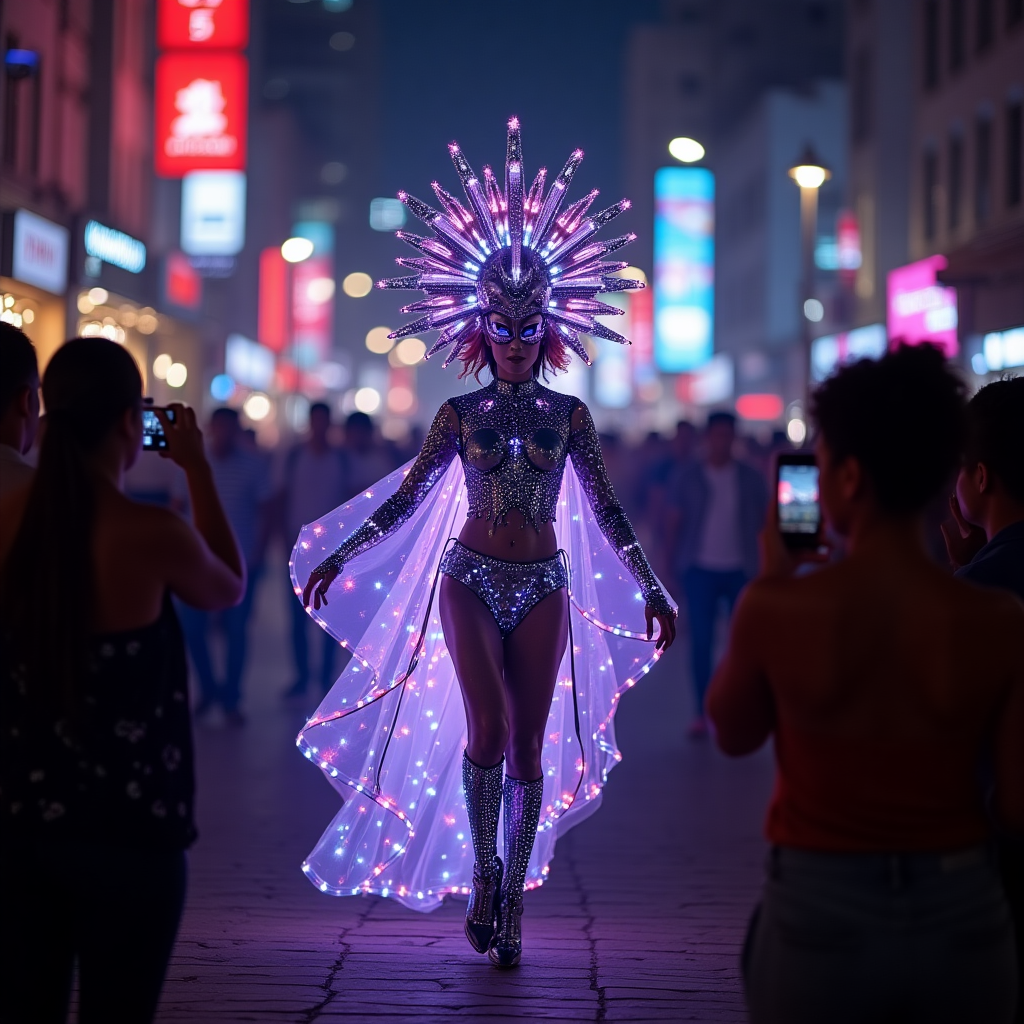
In the heart of Lagos, the streets throbbed with the rhythms of talking drums and the scent of roasted suya. It was the annual Eyo Festival, where white-clad figures floated like spirits through the crowd. But this year, something was different. A young woman named Chidinma, dressed in a luminous gown powered by micro-LEDs and adorned with motion-reactive fibers, spun in sync with the bata drummers. Her outfit shimmered in real time to the beat, guided by an AI algorithm synced to the festival’s sonic landscape. Tourists raised their phones to capture her, but they were already too late, she was trending globally, streamed live on thousands of devices.
It was no longer just a masquerade. It was a cultural remix, a living, breathing dance between heritage and hardware.
This is the new face of tradition, where silicon meets spirit and microchips power memories.
The Cultural Code is Being Rewritten in Real Time
Tradition was once thought to be timeless, guarded in books, dances, oral stories, and passed from generation to generation. But as technology evolves, so too does the way we interact with culture. We are no longer just remembering the past, we are reprogramming it.
From augmented reality experiences at ancient shrines to AI-generated Afrobeat tracks that revive forgotten dialects, culture is being actively remixed with real-time input from both machines and humans. We are witnessing a collision—no, a collaboration, between ancestral memory and digital intelligence.
Read More: Digital Humans: Are Virtual Beings the Future of Companionship?
Here’s how technology is remixing culture as we know it:
1. Augmented Reality and Immersive Heritage
Museums and cultural centers are now using AR glasses to allow users to experience heritage as it was lived centuries ago. Imagine standing in front of the Great Zimbabwe ruins and watching, through your lens, the entire ancient civilization rebuild itself before your eyes. Children no longer just hear about cultural myths, they walk through them in 3D.
AR has also come to street performances. In Brazil, Carnival dancers are now enhanced with holographic costume projections that can change depending on the music, temperature, or crowd energy, all monitored in real time.
2. AI as the New Cultural Archivist
Artificial intelligence is learning languages faster than ever before. But beyond mere translation, it is now reviving nearly lost dialects and reimagining ancestral songs.
Tools like Google’s Project Euphonia or Meta’s Massively Multilingual Speech model are being trained not just on modern conversations, but on oral traditions, chants, and folktales. By analyzing these audio archives, AI is helping communities reconnect with forgotten aspects of their identity.
What was once hidden in dusty tapes is now being remixed into modern beats, available on Spotify playlists curated by machine and elder alike.
3. Wearable Tech and Traditional Attire Merge
The line between performance art and traditional dress is fading. In South Korea, Hanbok designs are now integrated with flexible screens displaying real-time messages or poetic verses. In West Africa, traditional Ankara prints are being transformed into reactive fabrics that change hue with heat or movement.
This fusion of fashion and tech isn’t just for show, it’s a statement of evolution. Cultural attire becomes dynamic, living art that responds to its environment.
4. NFTs and the Decentralization of Cultural Ownership
Indigenous artists can now mint their work as NFTs, ensuring provenance and preventing cultural appropriation. A digital mask design inspired by Igbo cosmology can be sold to a global collector, while the royalties go directly to the artist’s community wallet on the blockchain.
This democratization of cultural production means traditions are no longer locked away or stolen they’re monetized, protected, and distributed with authorship intact.
5. Real-Time Cultural Remixing on Social Media
Platforms like TikTok and Instagram are where digital masquerades play out daily. Dancers from Kenya remix traditional moves with viral sounds, while creators in Mexico use filters to reimagine Día de los Muertos altars in surreal, pixelated forms.
It is no longer East vs. West, traditional vs. modern. It’s fusion, remix, and co-creation streamed and liked in real time.
Read More: Parakeet AI Might Just Be the Wingman You Need to Ace Your Next Job Interview
FAQs: Cultural Tech Remix Explained
Q1: Isn’t this destroying tradition?
Not necessarily. Technology doesn’t replace culture—it reinterprets it. Just as writing once threatened oral storytelling, yet both now coexist, digital tools offer a new medium for ancient stories.
Q2: Who owns cultural remixes created by AI?
Ownership is complex. Ideally, AI-trained cultural outputs should credit and benefit the communities whose data and stories were used. Blockchain can help ensure fair use and traceable rights.
Q3: How do communities ensure authenticity when using tech?
Many are collaborating directly with tech companies. Cultural custodians, elders, and artists co-design these experiences, maintaining control while embracing innovation.
Q4: Are there examples of this in education?
Yes. Interactive textbooks in Ghana use AR to teach folklore through visual storytelling. In Japan, students use VR headsets to walk through Shinto rituals guided by AI avatars.
Q5: Is this just a trend or a movement?
It’s a movement. As Gen Z and Alpha grow up with AI tools, remixing tradition will become second nature. Culture will evolve in loops, not lines constantly refreshed in real time.
Conclusion: The Masquerade Will Never Be the Same Again
We are entering a cultural renaissance, one not carved in marble but sculpted in code. As microchips meet masquerades, tradition becomes a live feed, not just a memory. Heritage isn’t disappearing. It’s being downloaded, filtered, re-coded, and reimagined for a hyper-connected world.
So next time you witness a masquerade, whether in person or on screen, look closer. That mask may blink. That drum may sync with your heartbeat. The past is no longer behind us, it’s being live-streamed into the future.


Pingback: How Drones Are Becoming the New Delivery Guys - Latest AI/Tech Info
Pingback: The Story of the Invention of Microchip - Latest AI/Tech Info