
Battlefield 2.0: Are AI War Robots the Next Game Changer?
Introduction: The Dawn of Battlefield 2.0
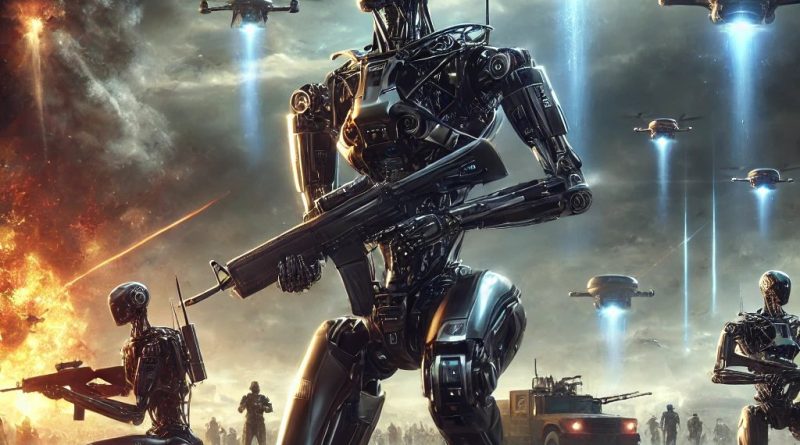
Picture this: A dusty, sun-scorched battlefield where not a single human soldier is in sight. Instead, agile, autonomous machines equipped with high-powered sensors and lightning-fast reflexes outmaneuver enemies with military precision. Welcome to Battlefield 2.0, where AI war robots are rewriting the rules of modern warfare.
Artificial Intelligence (AI) has already transformed industries—from healthcare to finance—but its infiltration into military applications is arguably the most controversial and revolutionary. As countries ramp up defense budgets to include AI and robotics, we’re witnessing a shift from boots on the ground to bots on the battlefield. But is this the next military evolution, or are we sprinting into a future we can’t fully control?
Let’s dive deep into how AI war robots are emerging as potential game changers in global defense strategies.
Historical Evolution of Warfare: From Traditional Soldiers to AI War Robots
Warfare has always been shaped by the technology of its time. In ancient battles, swords and shields determined outcomes. The industrial revolution introduced firearms, tanks, and airplanes. The 20th century brought nuclear weapons, cyber warfare, and unmanned drones.
Fast forward to today, and we’re entering an era where decisions may be made not by generals or presidents, but by algorithms. The timeline looks like this:
• World War I & II: Mechanized warfare, radar, and early cryptography.
• Cold War: Satellites, early computers, and nuclear deterrents.
• 21st Century: Cyber warfare, unmanned aerial vehicles (UAVs), and now—autonomous combat robots.
AI war robots are the latest chapter in this evolution. These machines go beyond remote-controlled drones; they can think, adapt, and even make battlefield decisions in real-time. This marks a fundamental shift—not just in how wars are fought, but in who (or what) does the fighting.
Read More: How The Application Of AI Can Be Used To Solve Insecurity In Nigeria
Technological Advancements in AI Robotics and Their Implications for Military Strategy
Modern AI-powered war machines rely on a fusion of advanced technologies:
• Computer Vision: Enables robots to “see” and identify objects or threats in complex environments.
• Machine Learning (ML): Allows continual adaptation based on battlefield data.
• Edge Computing: Processes data locally for real-time decisions.
• Swarming Technology: Enables coordination among multiple autonomous units, mimicking natural swarm behavior.
These innovations are not just theoretical. Companies like Boston Dynamics, Ghost Robotics, and defense giants like Lockheed Martin are developing semi-autonomous and fully autonomous systems—everything from quadrupedal scouts to AI-driven tanks.
For military strategists, this opens up new frontiers:
• Rapid response with minimal delay
• 24/7 combat endurance
• Surveillance without risk to human lives
• Precision targeting with reduced collateral damage
As machines grow smarter and more adaptable, traditional warfare doctrines are being rewritten.

Read More: Big Tech AI Investments – Microsoft, Google, and Meta racing to dominate AI development
Advantages of AI War Robots: Improved Efficiency, Precision, and Reduced Human Risk
The buzz around AI war robots isn’t just hype. The practical advantages are hard to ignore:
1. Reduced Human Casualties
Perhaps the most cited benefit is the ability to deploy robots in high-risk environments, keeping human soldiers out of harm’s way.
2. Unmatched Efficiency
AI doesn’t tire, hesitate, or need sleep. Robots can perform complex tasks in hostile zones continuously, making them ideal for long-term surveillance or defense missions.
3. Enhanced Precision
With high-resolution sensors and advanced targeting systems, AI robots can execute operations with surgical accuracy—drastically reducing civilian casualties.
4. Cost Savings (Long-Term)
Though expensive upfront, AI systems reduce long-term training, healthcare, and logistical costs associated with human personnel.
5. Data-Driven Warfare
AI robots collect and process real-time data, helping strategists make informed decisions rapidly.
These advantages aren’t just technical—they’re strategic. They offer a competitive edge that many militaries are racing to secure.
Ethical Concerns Surrounding the Deployment of AI in Warfare: Autonomous Decision-Making
But with great power comes great responsibility—and some serious ethical dilemmas.
Can We Trust AI to Make Life-and-Death Decisions?
Fully autonomous weapons systems, or “killer robots,” raise uncomfortable questions. Should a machine have the authority to decide who lives or dies? What if it makes a mistake?
Accountability and Transparency
If a robot malfunctions or violates international law, who is held accountable? The manufacturer? The military? The algorithm?
AI Bias and Targeting Errors
Just like in civilian applications, AI can inherit biases from training data, leading to wrongful targeting or identification.
Risk of Escalation
Autonomous systems may react faster than humans, potentially escalating conflicts before diplomacy can intervene.
Several global watchdogs and humanitarian organizations, including the UN, are pushing for international laws to regulate or even ban autonomous weapons. Yet the military race continues.
Case Studies of AI War Robots in Recent Conflicts: Successes and Failures
1. Azerbaijan-Armenia Conflict (2020)
In this conflict, Azerbaijan used AI-enhanced drones for surveillance and attack missions. The success of these drones was a wake-up call to other nations about the future of warfare.
2. Israel’s AI Targeting System (2021)
During operations in Gaza, Israel reportedly used an AI system to prioritize targets. This enabled rapid execution of high-risk missions, but raised ethical questions about civilian casualties.

Read More: Revolutionize Your Stock: How AI Is Transforming Small Business Inventory Management
Future Predictions: How AI War Robots Could Transform Global Military Tactics
Looking ahead, here’s how AI war robots might change the game entirely:
• Fully Automated Battle Squads: Swarms of drones and robots executing missions with minimal human oversight.
• AI-Driven Strategy Simulation: Real-time analysis of multiple battle scenarios to advise commanders or autonomous units.
• Predictive Warfare: Using AI to predict enemy movements, supply lines, and vulnerabilities.
• Cyber-Physical Integration: Merging AI robots with cyber warfare capabilities to launch simultaneous digital and physical attacks.
• Space-Based AI Defense Systems: AI-controlled satellites or orbital robots guarding space assets or enforcing no-fly zones.
Countries investing heavily in AI military R&D—like the U.S., China, Israel, and Russia—may soon hold not just the high ground, but the smart ground.
FAQ
Q1: Are AI war robots already in use today?
Yes, semi-autonomous robots and drones are already being deployed in conflicts, with more advanced versions in development.
Q2: Are there any international laws regulating AI in warfare?
Currently, there are no binding international laws specifically regulating autonomous weapons, but advocacy groups are pushing for global agreements.
Q3: Can AI war robots operate without any human control?
Some systems are fully autonomous in specific tasks, but most still require human oversight, especially for lethal actions.
Q4: Are these robots replacing human soldiers?
Not yet. They are currently used to augment human forces, especially in high-risk or repetitive tasks.
Q5: What’s the biggest risk of using AI in warfare?
The lack of accountability and the potential for unintended escalation or targeting errors are major concerns.
Conclusion: Marching into the Unknown
The battlefield is changing—faster than we ever imagined. AI war robots promise a future of surgical strikes, minimal casualties, and hyper-intelligent warfare. But they also pose existential questions about control, ethics, and the very nature of combat.
Are we ready for a war where the trigger is pulled not by a soldier’s finger, but by an algorithm’s decision?
As we step into Battlefield 2.0, the world must grapple with the double-edged sword of AI in warfare. The game is changing—and whether it leads to safer skies or darker times depends on how wisely we wield this powerful technology.


Pingback: The Truth about North Korea's AI-Powered Suicide Drones - Newline Tech