

The Role of AI in Improving Nigeria’s Agricultural Sector
Introduction: A Digital Revolution in Nigeria’s Farmlands
In a quiet village on the outskirts of Kaduna, a young farmer named Musa stared at his maize field, his face lined with worry. The unpredictable weather, soil degradation, and a recent pest outbreak had left his crops struggling. He had tried every traditional farming method passed down through generations, but the yield kept decreasing.
One evening, he attended a farmers’ workshop where he was introduced to Artificial Intelligence (AI) in agriculture. Skeptical at first, Musa soon learned how AI-powered solutions could predict weather patterns, detect plant diseases early, and even guide irrigation. With the help of an AI-driven mobile app, Musa optimized his farm operations, and within a year, his yield increased significantly.
Musa’s story reflects a broader transformation in Nigeria’s agricultural sector. AI is no longer a futuristic concept—it is becoming a game-changer, offering solutions to long-standing agricultural challenges. In this article, we will explore how AI is revolutionizing farming in Nigeria, the opportunities it presents, and the challenges that must be addressed.
Current Challenges in Nigeria’s Agricultural Sector
Nigeria, with its vast arable land and diverse climate, has the potential to be an agricultural powerhouse. However, the sector faces numerous challenges that limit productivity:
1. Unpredictable Weather Conditions
Climate change has made rainfall patterns erratic, leading to droughts and floods that destroy crops and reduce yields.
2. Low Crop Productivity
Traditional farming methods and poor access to modern technology have resulted in low per-hectare yields compared to global standards.
3. Pests and Diseases
Infestations by pests like locusts and the fall armyworm, along with plant diseases, cause significant losses annually.
4. Poor Soil Health Management
Farmers often lack the knowledge or resources to analyze soil conditions, leading to poor fertilizer application and nutrient depletion.
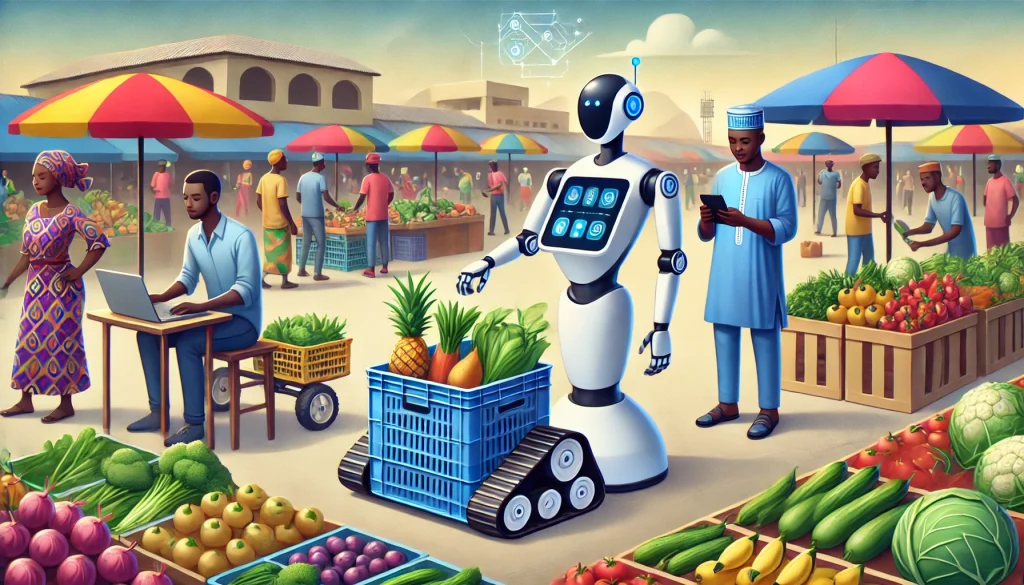
5. Market Access and Post-Harvest Losses
Farmers struggle with inefficient supply chains, leading to high post-harvest losses due to poor storage and transport infrastructure.
The good news? AI-powered solutions are emerging as a powerful tool to tackle these challenges head-on.
Read More: Top AI Tools Revolutionizing Music Production in Nigeria: Elevate Your Sound
How AI Technologies Can Enhance Crop Yield and Quality
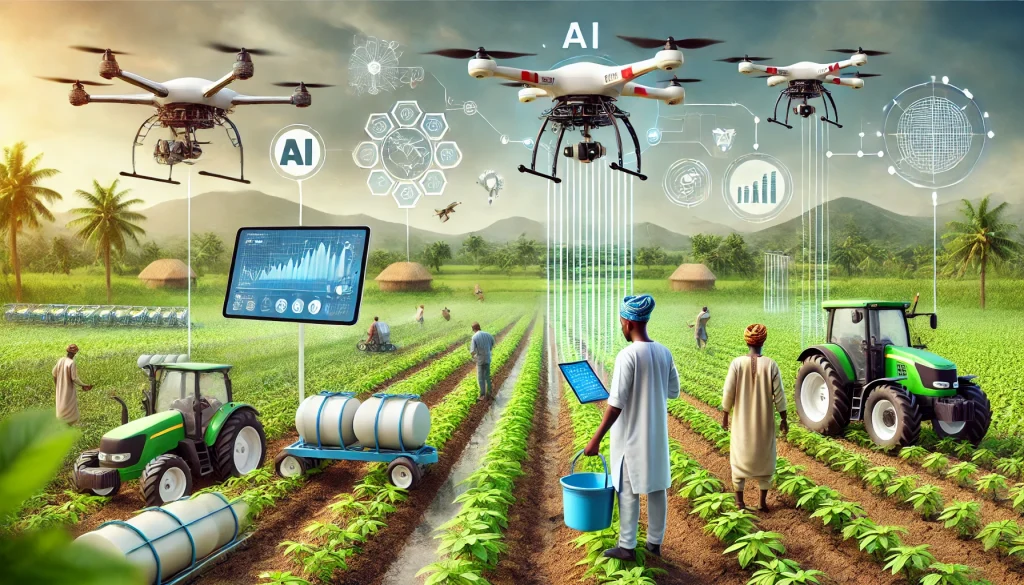
AI is revolutionizing crop production by optimizing farming practices through data-driven insights. Here’s how:
1. Smart Irrigation Systems
AI-powered irrigation systems analyze soil moisture levels and weather forecasts to ensure optimal watering, preventing over-irrigation or drought stress.
AI algorithms process satellite imagery and sensor data to provide real-time insights on soil conditions, nutrient deficiencies, and crop health, helping farmers apply fertilizers more effectively.
3. Automated Crop Monitoring
Drones equipped with AI-powered cameras scan farmlands for signs of stress, pests, or diseases, allowing for early intervention.
4. AI-Guided Seed Selection
AI models analyze soil composition and climate conditions to recommend the best seed varieties, ensuring higher yields and better resistance to environmental stress.
AI-Driven Tools for Pest Control and Disease Management
Pests and diseases are major threats to Nigerian farmers, but AI is providing proactive solutions to combat them:
1. AI-Powered Pest Detection Apps
Mobile applications, like PlantVillage, allow farmers to upload pictures of infected plants. The AI then diagnoses the issue and suggests treatment methods.
2. Predictive Pest Control
Machine learning models analyze historical pest outbreak data and predict when and where infestations are likely to occur, allowing for early intervention.
3. Automated Spraying Drones
AI-integrated drones identify pest-infested areas and spray targeted pesticide applications, reducing chemical waste and minimizing environmental impact.
The Role of Machine Learning in Soil Analysis and Management
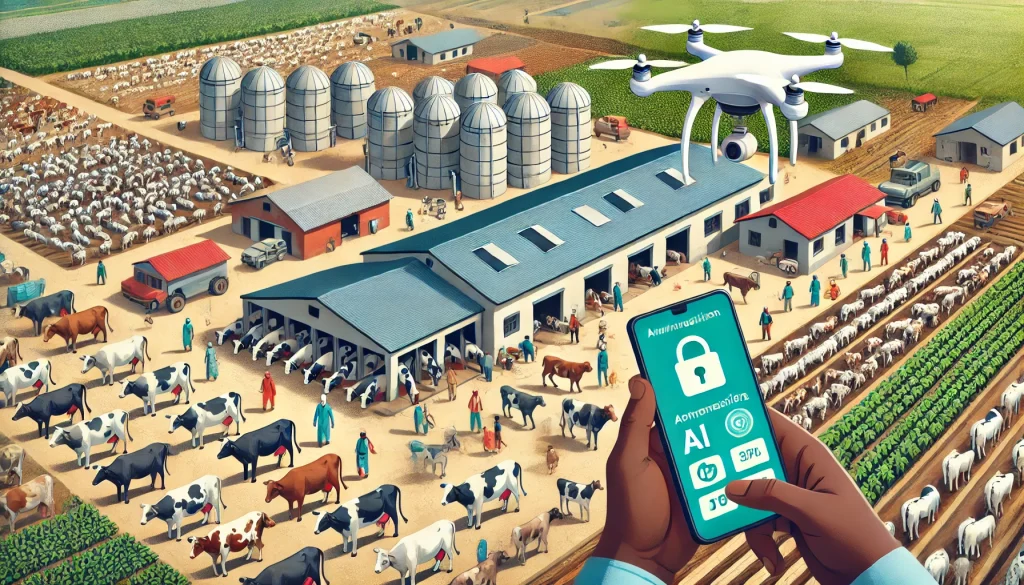
Soil quality is the foundation of successful farming. AI and machine learning are transforming soil management in the following ways:
1. AI-Driven Soil Testing Kits
Portable soil testing kits with AI algorithms provide instant analysis of soil nutrients, helping farmers apply the right fertilizers in the right quantities.
2. Smart Fertilizer Recommendations
AI tools assess soil conditions and suggest precise fertilizer blends to optimize nutrient balance and improve crop productivity.
3. Land Suitability Mapping
Using satellite data, AI maps high-potential farmlands, guiding farmers on the best locations for planting specific crops.
AI in Weather Forecasting and Its Impact on Farming Decisions
Unpredictable weather is a major challenge, but AI-driven forecasting systems are helping farmers make smarter decisions:
- AI-Powered Weather Apps provide localized weather forecasts, warning farmers about impending droughts or heavy rainfall.
- Climate Models analyze long-term weather trends, helping policymakers develop adaptive farming strategies.
- Early Flood Warnings help farmers relocate crops or take preventive measures to reduce losses.
Read More: The AI Gold Rush: Which Industry Will Strike It Rich, and How You Can Stake Your Claim
Case Studies of Successful AI Implementation in Nigerian Agriculture
Several initiatives are already proving the impact of AI in Nigeria:
1. Hello Tractor
Known as “Uber for Tractors,” this AI-powered platform connects farmers with available tractors, boosting mechanization and efficiency.
Zenvus uses AI-driven sensors to analyze soil data, helping farmers make data-backed decisions about irrigation and fertilization.
3. FarmCrowdy
This platform uses AI to connect investors with smallholder farmers, improving access to funding and enhancing agricultural productivity.
Future Prospects and Challenges of Integrating AI in Agriculture
While AI holds immense potential, challenges remain:
1. High Cost of AI Implementation
AI tools and sensors can be expensive, making adoption difficult for smallholder farmers.
2. Digital Literacy Gap
Many Nigerian farmers lack the technical skills to operate AI-driven tools, highlighting the need for training programs.
3. Infrastructure Challenges
Limited internet connectivity and unreliable power supply hamper AI adoption in rural areas.
4. Data Privacy Concerns
With AI-driven agriculture relying on big data, concerns about data ownership and security must be addressed.
However, government policies, private sector investments, and farmer education can help overcome these barriers, unlocking AI’s full potential in Nigerian agriculture.
Read More: Best Laptops for Students in Nigeria Under ₦200,000
FAQ
1. How can small-scale farmers afford AI technology?
Government subsidies, grants, and AI-as-a-service models can make AI tools more affordable for smallholder farmers.
2. Can AI completely replace traditional farming methods?
No, AI is meant to enhance traditional methods, not replace them. Farmers will still play a critical role in decision-making.
3. What are the best AI tools for Nigerian farmers?
Some of the best AI tools include Hello Tractor, PlantVillage, Zenvus, and AI-powered weather apps.
4. Is AI farming environmentally friendly?
Yes! AI promotes precision farming, reducing waste, pesticide use, and water consumption.
Conclusion
AI is no longer a distant dream for Nigeria’s agriculture—it is reshaping the sector today. From boosting crop yields and managing pests to optimizing irrigation and predicting weather, AI-driven solutions are helping farmers make smarter decisions.
While challenges exist, investments in infrastructure, education, and affordability will pave the way for widespread AI adoption. With the right policies and support, Nigeria can leverage AI to achieve food security, boost farmer incomes, and create a more sustainable agricultural future.
The future of Nigerian farming is digital. Will you be part of the revolution?



Pingback: Space Tech & AI – AI-assisted space exploration, Mars missions, and satellite-based internet (Starlink, Amazon Kuiper) - Newline Tech