
Let’s Talk About Tesla’s Optimus Because Your New Coworker Might Be a Robot with Abs
Introduction: A Morning to Remember
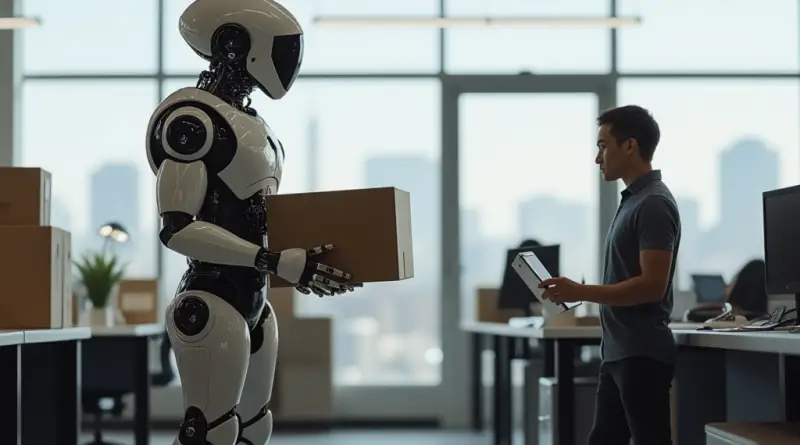
Imagine walking into your office lobby on a bright spring morning. You greet the security guard, nod to a few colleagues, and then stop in your tracks. There, doing warm up stretches, is a figure that looks like it belongs in a sci fi movie rather than a cubicle farm. Defined torso muscles ripple under sleek housing panels. It raises an eyebrow at you or at least seems to. You realize your new coworker is not a person at all but a robot with abs. That is the promise of Tesla’s Optimus and the dawn of a workplace unlike anything we have ever known.
What Is Tesla’s Optimus?
Tesla’s Optimus is a humanoid robot designed to carry out tasks that range from simple deliveries in a warehouse to potentially more complex roles on a factory floor. It stands around five feet eight inches tall and weighs about 125 pounds. Thanks to advanced electric actuators, a powerful onboard computer, and a suite of sensors, Optimus can navigate human environments, recognize objects and adapt to new tasks with some guidance.
Read More: How to Become a Successful ML Engineer
The Future Coworker: Friend or Foe?
Will Optimus really sit at a desk beside you, churning out reports? Probably not in the near term. Tesla founder Elon Musk envisions a world where robots take over repetitive tasks so humans can focus on creative problem solving and interpersonal collaboration. In factories they might lift heavy parts or fetch tools. In offices they may shuttle files or scan documents. Over time, as artificial intelligence improves, they could even handle basic customer interactions. Imagine a fleet of these in a call center or on a hospital floor.
Key Features at a Glance
- Human Form Factor
Optimus is built to work in spaces designed for people. Doorways desks and corridors are all accessible. - Adaptive Learning
Using onboard AI models and Tesla’s data network, it can update its skills and software over the air. - Safety First
Force sensors and vision modules help it avoid collisions with people and objects. It can pause instantly if something unexpected enters its path. - Modular Maintenance
The torso shell is designed for quick access to internal parts. This reduces downtime when repairs or upgrades are needed.
How Optimus Could Change Your Workday
Picture office supplies arriving at your desk without you needing to request them. Need a fresh box of pens? A gentle robotic hand places it on your table. In a warehouse setting you might see robots stacking pallets or sorting inventory by color or size. The aim is to free you from dull or physically taxing work. This could boost productivity and even lower workplace injury rates over time.
Challenges and Questions
Of course, integrating robots into daily work life brings questions. How will you train alongside a machine? What ethical guidelines should govern robot behavior? Will job roles shift dramatically? Companies and regulators must collaborate to set clear standards for safety, privacy, and task allocation. Worker retraining programs may become as vital as the robots themselves.
Read More: It’s Japan made Flying Scooter the Next Tech Hot Cake
Frequently Asked Questions
What tasks can Optimus perform today?
Currently prototypes can walk steady carry up to 20 pounds and execute simple pick and place operations in a controlled setup.
When will Optimus be available for purchase?
Tesla aims to deliver a limited run of factory versions by late 2025, with wider availability depending on production scaling.
Will robots like Optimus replace human jobs?
They will automate repetitive or physically demanding roles. The goal is for humans to focus on creative strategic work while robots handle routine tasks safely.
How safe is working alongside these robots?
Optimus includes full suite of sensors that detect people and obstacles. It can stop motion instantly if it senses a collision risk.
Conclusion: Embracing the Age of the Robot Coworker
Tesla’s Optimus represents an exciting step toward an automated future that still values human ingenuity. Your next teammate might very well be a robot sculpted with striking abs and smart enough to fetch your coffee. As we learn to collaborate with machines built in our own image, the true promise lies in using our unique strengths, creativity, empathy and complex problem solving to build a workplace that is safer more productive and infinitely more interesting. Embrace the change because your new coworker could arrive sooner than you think.


Pingback: China EV is Something to Behold — And Honestly, Elon Should Be Worried - Newline Tech
Pingback: Elon Musk Cyber Cab The Self-Driving Ride That Could Change Cities Forever - Latest AI/Tech Info