
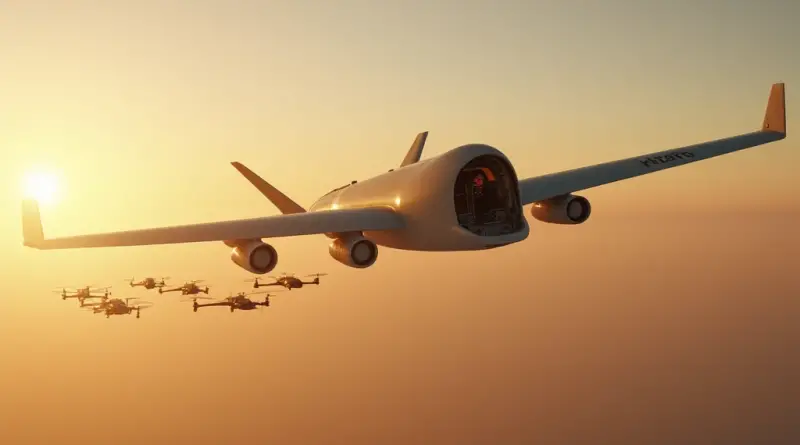
China’s Drone Mothership Could Be the Command Center of the Skies
Once upon a dawn tinted with the promise of new heights a team of engineers gathered beneath the colossal silhouette of a prototype unlike anything the world had seen. As sunlight pierced the hangar windows it revealed the graceful sweep of an eighty two foot wingspan and the secret it had carried all along. This was not merely a flying machine but a “drone mothership” born from China’s ambition to reshape the rules of aerial warfare. Its name was Jiu Tian SS UAV and its mission was simple yet staggering launch not one but a hundred drones from the belly of the sky itself.
Read More: Genius Inventions the World is Not Yet Ready For
A New Era for Unmanned Flight
Imagine a single unmanned aerial vehicle soaring above fifty thousand feet beyond the reach of many air defense systems. From its hidden internal bay it deploys swarms of smaller drones each programmed for intelligence gathering electronic warfare or precision strikes. This drone carrier can traverse up to seven thousand kilometres and release over one hundred child drones mid mission. With a maximum takeoff weight of sixteen tonnes and a wingspan nearing twenty five metres this airborne fortress can also deliver roughly two thousand two hundred pounds of missiles or other payloads.
How the Jiu Tian Works
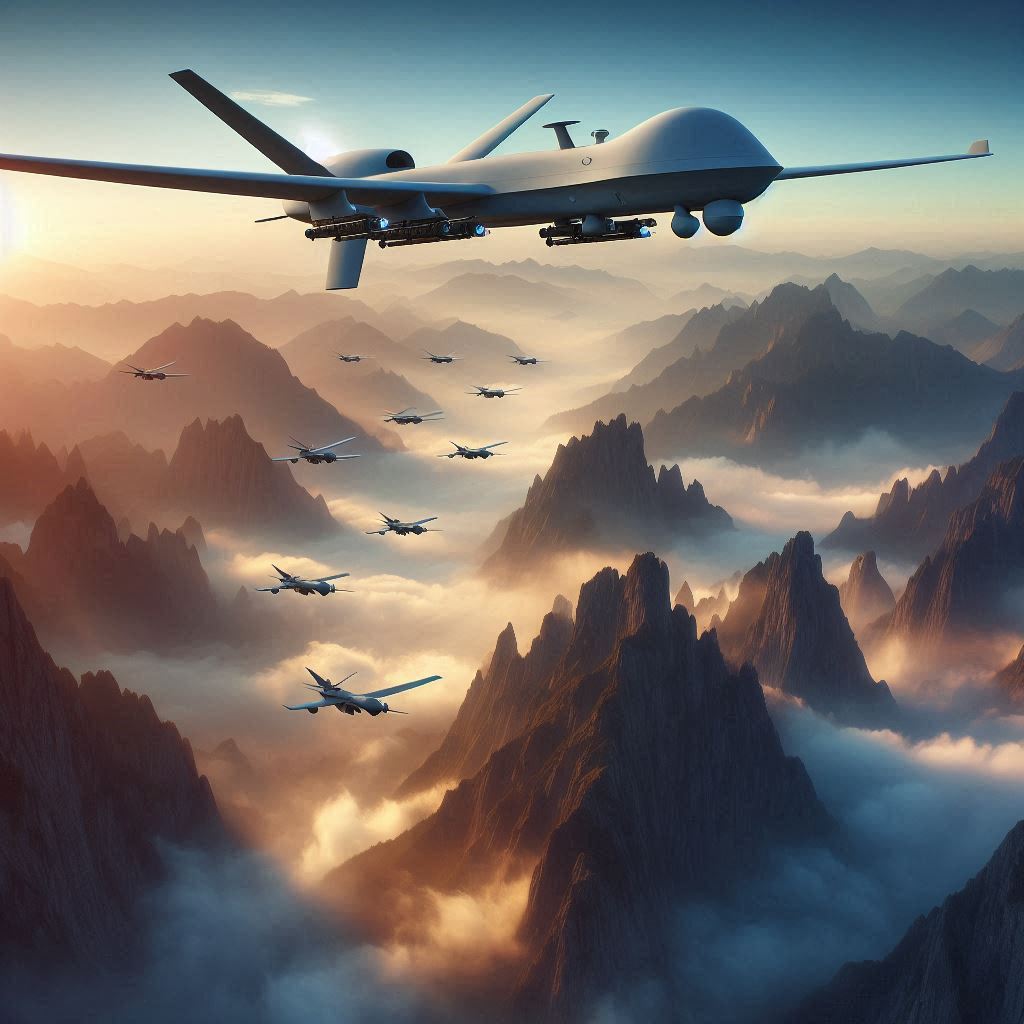
At its core Jiu Tian relies on a modular internal bay that opens seamlessly at altitude. Inside a network of robotic racks hold each smaller drone ready for action. When command signals arrive from a ground station or a mother ship the bay doors slide open and one after another the child drones launch into the thin air. Each emerges fully autonomous performing tasks individual of its siblings or cooperating in a synchronized swarm. This capability allows Jiu Tian to adapt on the fly to diverse mission profiles including surveillance search and rescue and swarming attacks.
Read More: The Ultimate Guide to the Best Free AI Writing Tool
Tactical Advantages on the Modern Battlefield
The idea of a drone carrier brings several advantages
1 Operating above medium range air defenses means Jiu Tian can project power deeper into contested zones
2 The carrier model reduces the need for multiple launch platforms consolidating resources into one strategic asset
3 Swarm tactics allow overwhelming enemy defenses by sheer numbers overwhelming radar or interceptor networks
4 Payload flexibility transforms the carrier from a recon platform to a strike asset in a matter of minutes
Comparing Jiu Tian to Western Counterparts
While the United States operates its own high altitude drones like the RQ4 Global Hawk and MQ9 Reaper those platforms emphasize endurance and sensor suites more than hive like deployment. The Jiu Tian concept resembles a flying aircraft carrier more than a standalone scout. By combining range payload and mothership functionality China is staking a claim in a new category of unmanned aerial warfare.
Read More: Can AI Truly Understand a Human Breakdown?
Frequently Asked Questions
What is the Jiu Tian SS UAV?
Jiu Tian SS UAV is China’s first large scale drone carrier capable of transporting and deploying over one hundred smaller drones from its internal payload bay at altitudes above fifty thousand feet
When will Jiu Tian undertake its first mission?
According to Chinese state media the maiden flight is scheduled by the end of June 2025 following tests at high altitudes and long distances
How far can this drone carrier fly?
It is designed for missions up to seven thousand kilometres enabling transcontinental operations without refuelling
What types of drones can it launch?
The system can deploy reconnaissance drones electronic warfare drones loitering munitions and other specialized unmanned systems tailored for surveillance rescue or kamikaze style strikes.
Does this innovation change global military dynamics?
The ability to launch coordinated swarms from a single high altitude platform poses new challenges for air defense networks potentially shifting the balance of power in contested regions.
Conclusion
China’s Jiu Tian SS UAV invites us to reimagine the sky as more than a battlefield but a hive of innovation where giant carriers birth swarms on demand. As the world watches its first flights later this summer we stand at the threshold of a new chapter in unmanned aerial strategy. The age of solitary drones may soon yield to fleets launched from mighty mothers soaring above old defenses proving that in the modern sky one is never enough.


Pingback: Not Just Silicon Valley: Exploring the Unexpected Tech Capitals of the World - Newline Tech
Pingback: From Tweets to Tech: The Untold Story Behind Elon Musk’s Grok - Newline Tech
Pingback: Why China is Dominating the World in Technology - Latest AI/Tech Info