

Before the Storm: How AI Predicts and Prevents Natural Disasters
When the skies darkened over the coastal village of San Pedro, most of its residents were already on their way inland. Families had packed their belongings. Roads were lined with cars, windows were boarded, and the local emergency response team was in full swing. There were no sirens blaring or last-minute scrambles. There was no panic. They had known for days that a storm was coming not because of a lucky guess or old folk wisdom, but because of artificial intelligence.
Just five years earlier, that same village had been caught off guard by a similar cyclone. It had arrived swiftly and violently, leaving behind damaged homes, flooded streets, and shattered lives. The difference between then and now? A line of code and a neural network that saw the signs before any human ever could.
The Dawn of Intelligent Forecasting
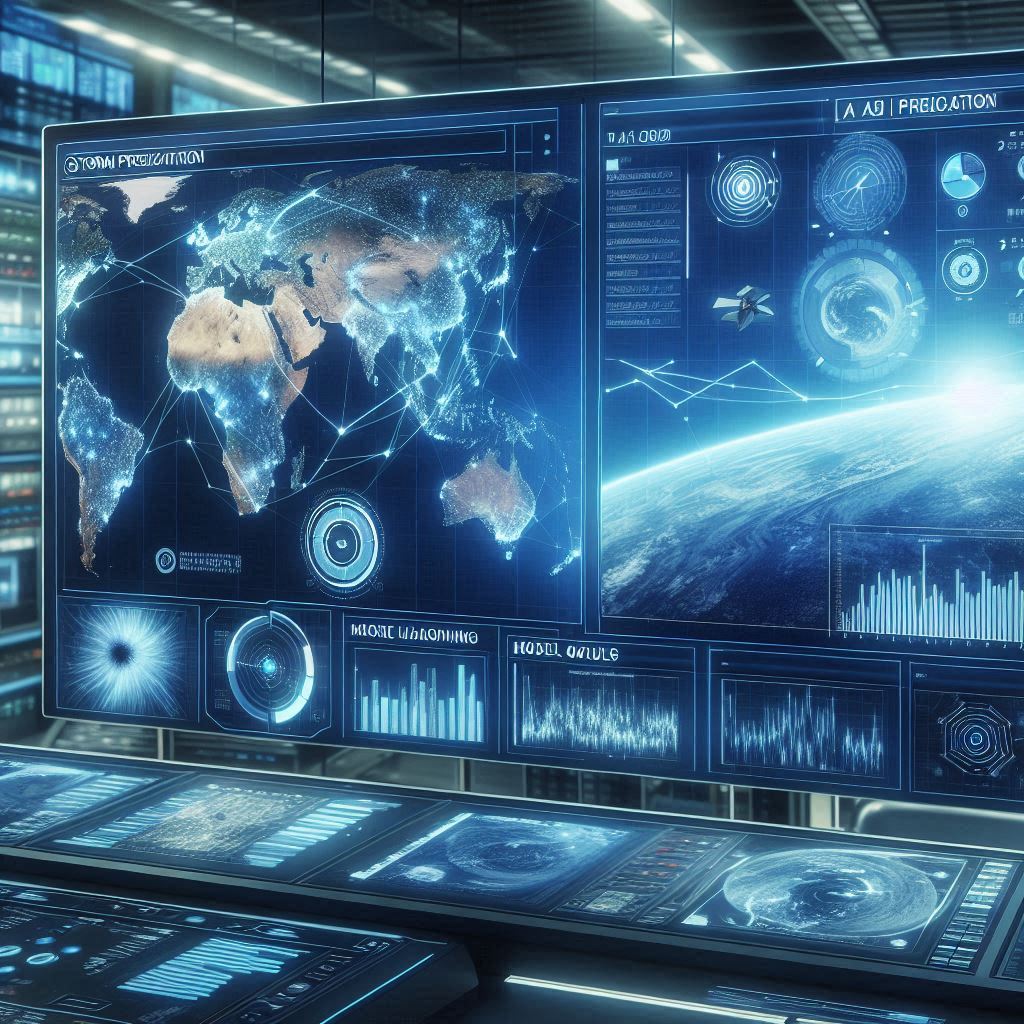
Artificial intelligence has evolved from a concept of science fiction into a crucial ally in disaster management. Once limited to data crunching and simple predictions, AI now harnesses the power of real-time satellite data, historical weather patterns, and complex simulations to forecast natural disasters days or even weeks in advance.
Traditional meteorology relies heavily on models that need continuous human oversight. While effective to a degree, these systems are often slow to adapt to unexpected variables. AI, on the other hand, learns dynamically. It ingests massive amounts of data from multiple sources — including seismic activity monitors, ocean temperatures, wind currents, and atmospheric pressure to deliver rapid and often uncannily accurate predictions.
Read More: AI-Powered Learning Journeys: How Personalized Plans Are Revolutionizing Education
Learning from the Past to Protect the Future
At the heart of AI’s ability to predict natural disasters is a method known as machine learning. These systems are trained on decades of historical data, everything from rainfall measurements to tectonic plate movements. Over time, they learn the subtle patterns and relationships that human analysts might overlook.
For instance, an AI model might detect a slight uptick in ocean temperatures off the western coast of Africa and correlate it with a 70 percent chance of hurricane formation in the Gulf of Mexico. By making these connections early, AI provides precious lead time for governments and communities to prepare.
In California, AI is being used to predict wildfires by analyzing humidity levels, wind speed, vegetation density, and even satellite imagery of smoke plumes. In Indonesia, AI-driven tsunami warning systems monitor seismic shifts in the ocean floor in real time. In Japan, a nation constantly on high alert for earthquakes, machine learning is being embedded into early-warning networks that can alert residents seconds before the ground starts to shake, just enough time to seek cover or pause critical systems.
Prevention: More Than Just Prediction
AI is not just about sounding the alarm. It is also being used to actively prevent the worst effects of natural disasters.
Consider flood management. AI-powered systems can simulate the impact of heavy rainfall on city infrastructure, identifying weak spots in drainage networks long before the skies open up. Urban planners can use this data to design better flood-resistant roads and buildings, while emergency teams can strategically pre-deploy resources to the most vulnerable areas.
In agriculture, predictive models help farmers prepare for droughts or extreme rainfall, reducing crop failure and economic losses. In coastal regions, AI helps monitor rising sea levels and forecast storm surges, giving residents the information they need to elevate homes or build barriers before disaster strikes.

Read More: How to Build a Passive Income Stream with AI in Nigeria
The Role of Real-Time Data
Speed is everything during a crisis. AI systems now incorporate real-time data feeds from satellites, drones, social media, and sensor networks. These live updates allow AI to adapt and refine its predictions as new information becomes available.
For example, during Hurricane Ian in 2022, an AI model trained by NOAA (National Oceanic and Atmospheric Administration) was able to predict the storm’s shift in trajectory 24 hours before traditional models did. That small window led to timely evacuations that saved thousands of lives.
In disaster zones, AI-powered drones equipped with computer vision can scan damaged areas and identify people in need of help far faster than human search-and-rescue teams. This blend of automation and human collaboration creates a response effort that is faster, smarter, and more efficient.
Challenges on the Horizon
Despite its promise, AI in disaster prediction is not without limitations. Data gaps, especially in developing regions, can hinder the accuracy of models. There is also the risk of overreliance. AI should complement human judgment, not replace it.
Ethical concerns must also be addressed. Who owns the data? How is it being used? What happens if a prediction is wrong? These are questions that require thoughtful regulation and transparency.
However, the biggest challenge may be access. While wealthier nations invest in AI research and infrastructure, many of the world’s most vulnerable populations remain without these technological lifelines. Bridging this gap will require global cooperation, funding, and the will to make AI an accessible tool for all.
A Smarter, Safer Future
The storm that loomed over San Pedro passed through with minimal damage. Thanks to AI, the community was prepared. Shelters were stocked. Power grids were safeguarded. Medical teams were mobilized. The technology didn’t stop the storm but it changed the outcome.
In the face of rising global temperatures and increasingly unpredictable weather patterns, the ability to foresee and adapt is no longer optional. AI is not a silver bullet, but it is one of the most powerful tools we have to build resilience, safeguard lives, and prepare for what’s ahead.
As we continue to unlock its potential, the story of how we face natural disasters is being rewritten. And this time, it starts before the storm.

Pingback: Why are tech stocks so volatile? - Newline Tech