
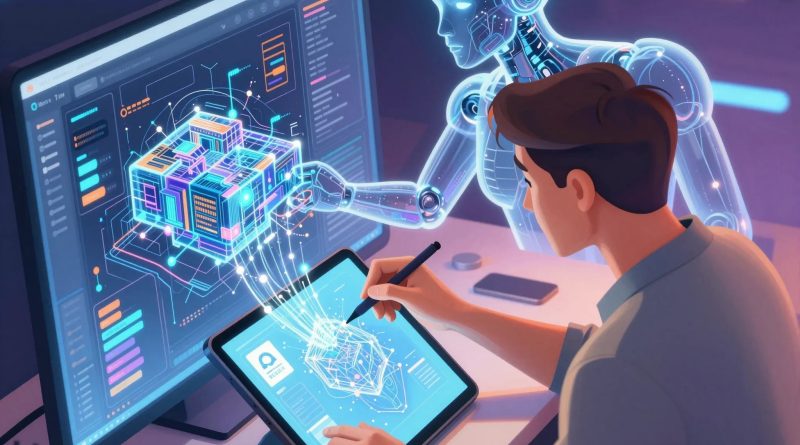
AI Systems That Are Quietly Replacing Human Tasks
Introduction
Artificial intelligence is no longer knocking loudly at the door of the workplace. It has already stepped inside, taken a seat, and started working. While headlines often focus on dramatic breakthroughs, the real transformation is happening quietly. Across offices, factories, hospitals, and online platforms, AI systems are steadily taking over tasks once handled entirely by humans.
This shift is not sudden or explosive. It is subtle, efficient, and deeply integrated into daily operations. Many people interact with AI every day without realizing it. From automated emails to intelligent decision support systems, AI is reshaping work in ways that feel invisible but powerful.
The Silent Rise of Task Automation
Unlike past technological revolutions, AI does not always replace jobs overnight. Instead, it replaces tasks within jobs. A single role may still exist, but many of its routine responsibilities are now handled by machines.
This gradual approach makes AI adoption easier for organizations. It also makes the change harder to notice. Tasks that once took hours are completed in seconds. Decisions that required teams now rely on intelligent models.
| Human Task | AI Replacement |
|---|---|
| Data entry | Automated data processing |
| Scheduling | Intelligent calendar assistants |
| Customer support | AI chatbots |
| Report writing | AI content generators |
| Quality checks | Computer vision systems |
Read More: Generative AI Tools You Won’t Believe Exist
Industries Where AI Is Taking Over Quietly
AI is not limited to tech companies. It is spreading across industries that traditionally relied on human judgment and experience.
Office and Administrative Work
AI handles email sorting, meeting scheduling, document summarization, and workflow management. Virtual assistants reduce repetitive tasks, allowing employees to focus on strategy and creativity.
Finance and Accounting
AI systems review transactions, detect fraud, and generate financial reports. Algorithms spot anomalies faster than humans and operate around the clock.
Healthcare Support Roles
AI assists with appointment scheduling, patient triage, and medical record analysis. While doctors remain central, many background tasks are now automated.
Marketing and Media
Content planning, ad optimization, audience targeting, and performance analysis are increasingly AI driven. Campaigns adjust in real time without manual intervention.
| Industry | AI-Driven Tasks |
|---|---|
| Healthcare | Patient data analysis |
| Finance | Risk assessment |
| Marketing | Campaign optimization |
| Logistics | Route planning |
| Education | Personalized learning |
Why AI Excels at Replacing Tasks
AI thrives on patterns, repetition, and large data sets. Tasks that follow rules or predictable workflows are ideal for automation. Unlike humans, AI does not get tired, distracted, or inconsistent.
Another advantage is scalability. Once trained, AI systems can perform the same task for one user or one million users with minimal additional cost. This makes them attractive to businesses aiming for efficiency.
The Benefits Businesses Are Seeing
Organizations adopting AI task automation report measurable gains. Productivity improves. Errors decrease. Response times shorten. Costs drop.
AI also enables faster decision-making. Instead of waiting for reports, managers receive real-time insights. This agility creates competitive advantages in fast-moving markets.
| Benefit | Impact |
|---|---|
| Speed | Tasks completed instantly |
| Accuracy | Fewer human errors |
| Cost efficiency | Lower operational expenses |
| Consistency | Uniform task execution |
| Availability | 24-hour operation |
The Human Side of Task Replacement
Despite fears, AI is not eliminating human relevance. It is changing it. As machines handle repetitive work, humans focus on judgment, creativity, and relationships.
New roles are emerging. AI trainers, prompt engineers, and system supervisors are becoming essential. The challenge lies in reskilling and adaptation, not replacement.
Organizations that succeed treat AI as a collaborator rather than a competitor. Workers who learn to work alongside AI gain stronger productivity and influence.

Read More: This AI Is Transforming Productivity Like Never Before
Ethical Questions No One Notices at First
Quiet automation raises important concerns. When decisions shift from humans to algorithms, accountability becomes less clear. Bias embedded in data can influence outcomes without transparency.
There is also the issue of consent. Many users do not realize AI systems are handling their data or interactions. Clear policies and ethical standards are becoming increasingly important.
Governments and regulators are beginning to address these issues, but policy often lags behind technology.
What This Means for the Future of Work
The future workplace will not be human versus machine. It will be human plus machine. Jobs will evolve as tasks shift. Skills like critical thinking, emotional intelligence, and strategic planning will gain value.
Those who ignore AI risk falling behind. Those who understand it gain leverage. Learning how AI systems work is quickly becoming a basic professional skill.
How Individuals Can Stay Relevant
- Learn how AI tools work in your field
- Focus on creative and strategic skills
- Use AI to enhance productivity
- Stay informed about workplace automation
- Adapt continuously
AI rewards curiosity and flexibility.
Read More: The Dark Side of AI Ethics No One Talks About
Frequently Asked Questions
Is AI replacing jobs or tasks?
Mostly tasks, not entire jobs.
Which tasks are most at risk?
Repetitive, rule-based tasks.
Can humans compete with AI?
Yes, in creativity and judgment.
Is AI adoption slowing down?
No, it is accelerating quietly.
Conclusion
AI systems are quietly replacing human tasks across industries, not through dramatic disruption but through steady integration. This silent transformation is reshaping how work gets done, improving efficiency while challenging traditional roles. The future belongs to those who notice the change early and learn how to work with intelligent systems instead of against them.

Pingback: Global AI Regulations Are Coming — Are You Ready? - Latest AI/Tech Info
Pingback: Google and Khan Academy Partner to Launch Gemini-Powered Writing Coach for Students - Latest AI/Tech Info
Pingback: The Home Depot and Google Cloud Launch Agentic AI Tools to Transform Customer Support - Latest AI/Tech Info