

AI in Healthcare: Breakthroughs in Diagnostics and Treatment
The healthcare industry is undergoing a technological revolution. The future of medicine is no longer confined to the boundaries of human expertise alone; artificial intelligence (AI) is making a significant impact, transforming the landscape of healthcare delivery.
From predictive analytics and faster diagnostics to personalized treatments and drug discovery, AI is redefining the way we approach healthcare challenges. In fact, it’s not an exaggeration to say that AI could be the most transformative force in healthcare in the 21st century.
In this article, we’ll explore how AI is revolutionizing diagnostics and treatment, the breakthroughs we’ve seen so far, and what the future holds for healthcare professionals and patients alike.
Let’s delve into the groundbreaking ways that AI is improving patient outcomes, driving innovation, and enabling healthcare systems to become more efficient, accurate, and accessible.
What Is AI in Healthcare?
Artificial intelligence refers to the use of advanced algorithms and machine learning (ML) techniques to enable computers to perform tasks that typically require human intelligence. In healthcare, AI encompasses a wide array of technologies, including machine learning, deep learning, natural language processing (NLP), and computer vision.
AI can be used to process large volumes of medical data, analyze images, interpret medical records, and assist in decision-making.
This technology is helping medical professionals make more accurate diagnoses, identify patterns, and predict outcomes with greater precision than ever before.
By automating repetitive tasks and improving the speed and accuracy of diagnoses, AI is transforming both the administrative and clinical aspects of healthcare.
AI in Diagnostics – Revolutionizing Disease Detection
In this section, we will focus on how AI is driving advancements in diagnostics, including imaging and predictive analytics.
AI in Diagnostics: Revolutionizing Disease Detection
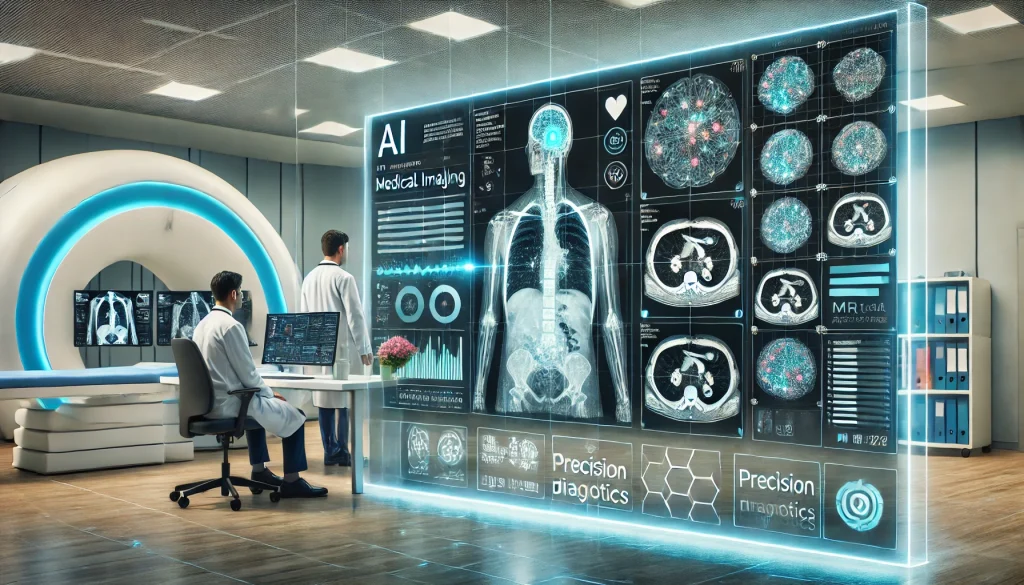
One of the most exciting applications of AI in healthcare is its role in diagnostics. In particular, AI-powered tools are revolutionizing the way medical imaging is interpreted.
For example, AI can analyze radiology images (such as X-rays, MRIs, and CT scans) with a level of detail and accuracy that rivals human doctors, sometimes even identifying problems that may be missed by the human eye.
AI in Medical Imaging
AI tools like Google Health’s AI have demonstrated impressive capabilities in diagnosing conditions like breast cancer. Through machine learning, the system can learn from vast amounts of data, including mammograms, and then analyze new images to detect potential tumors.
Studies have shown that AI can outperform radiologists in identifying cancers at earlier stages, ultimately leading to better patient outcomes.
Similarly, Zebra Medical Vision, an AI platform, uses algorithms to analyze medical imaging data and identify a range of conditions from cardiovascular disease to liver issues. The AI can detect diseases from images more quickly and accurately than traditional methods, reducing the likelihood of human error.
Predictive Analytics: AI for Early Detection
Beyond imaging, AI’s predictive capabilities are also making waves in early disease detection. AI systems can be trained on large datasets of patient histories, lifestyle factors, and genetic information to predict the risk of developing diseases such as diabetes, heart disease, and even some forms of cancer.
This approach empowers healthcare providers to detect conditions before they become life-threatening, allowing for proactive and preventative measures to be put in place.
For instance, IBM Watson Health has collaborated with medical institutions to use AI to predict which patients are at risk of developing chronic diseases such as kidney failure, enabling early interventions that can prevent the need for more intensive treatments down the road.
AI in Treatment: Personalizing Medicine and Therapy
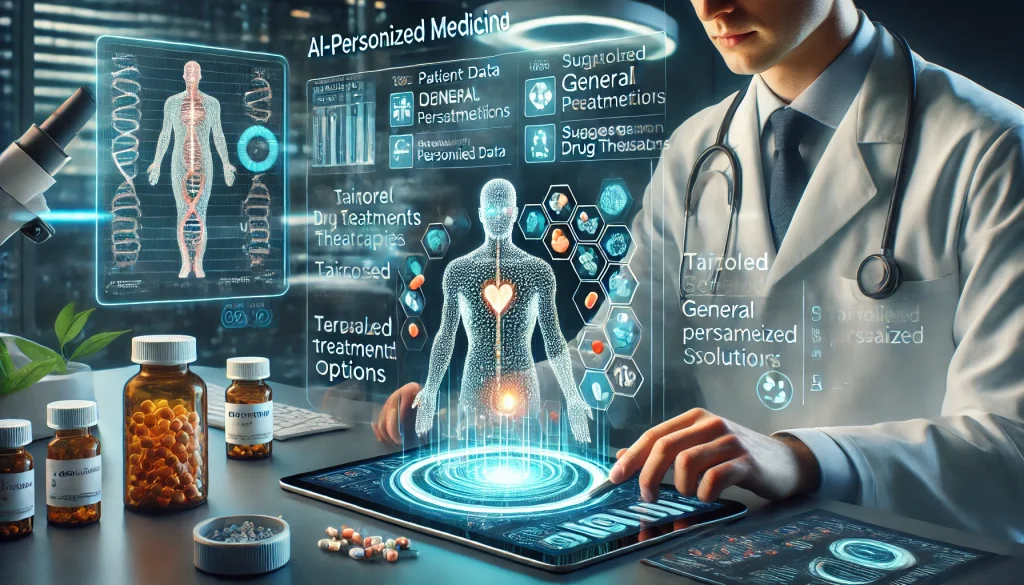
In the realm of treatment, AI is enabling a shift toward personalized medicine—the tailoring of medical treatments to individual patients based on their genetic makeup, lifestyle, and other unique factors. This contrasts with the traditional “one-size-fits-all” approach, where treatments are standardized across large populations, often resulting in less effective outcomes.
AI and Precision Medicine
Deep Genomics, for example, is leveraging AI to analyze the human genome in an effort to discover new ways to treat genetic disorders. By analyzing the genetic mutations that lead to diseases, AI can help identify potential therapeutic targets and develop drugs that are specifically designed for patients with particular genetic profiles.
Similarly, AI is being used to tailor cancer treatments to individual patients. Tempus, a company specializing in precision medicine, uses AI and machine learning to analyze clinical and molecular data in order to develop personalized cancer treatment plans.
The company’s platform evaluates a patient’s unique tumor genomics, helping doctors select the most effective treatments based on the patient’s specific condition.
AI in Drug Discovery
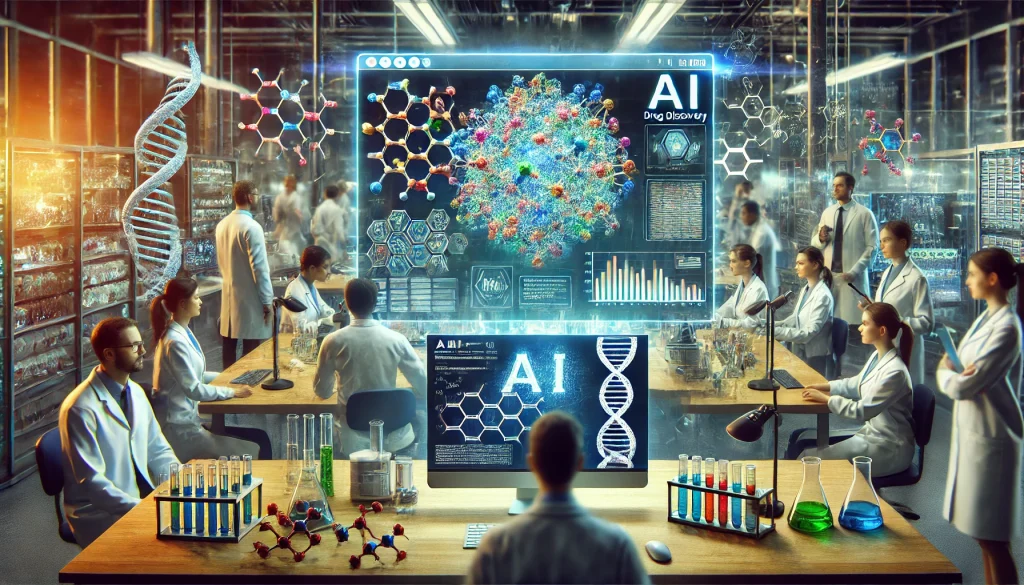
AI is also playing a transformative role in drug discovery. Developing new drugs is a lengthy and costly process, but AI is accelerating this timeline by predicting which compounds may be most effective in treating specific diseases.
For example, Insilico Medicine uses AI to identify new drug candidates for diseases such as cancer and fibrosis, significantly reducing the time it takes to bring a drug to market.
One of the major breakthroughs in AI-driven drug discovery occurred when AlphaFold, an AI program developed by DeepMind, solved the 50-year-old problem of protein folding. This breakthrough has the potential to revolutionize how we understand diseases and develop new treatments.
AI in Surgical Assistance: Improving Precision and Outcomes
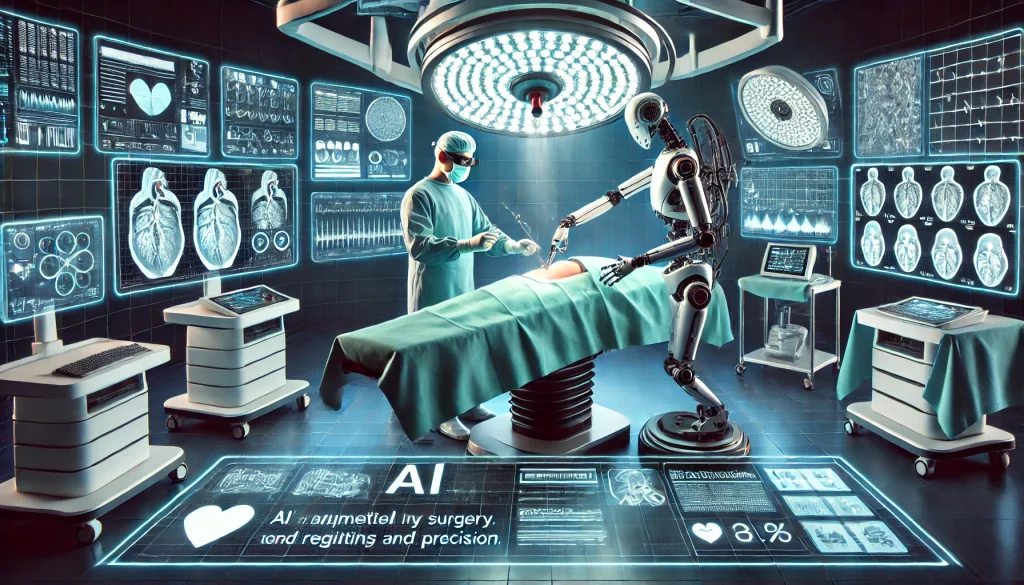
AI is also making its mark in the operating room. Surgical robots powered by AI, such as the da Vinci Surgical System, are improving precision and reducing human error. These AI-driven robotic systems assist surgeons by providing enhanced visualization, fine motor control, and even autonomous capabilities in some cases.
AI-Powered Robotics in Surgery
AI-assisted robotic systems are particularly useful in minimally invasive surgeries, where precision is crucial. For instance, during robotic-assisted prostate surgery, AI can help the surgeon navigate critical areas of the body while avoiding sensitive tissues, thereby minimizing the risk of complications. These robotic systems can also enable quicker recovery times for patients.
AI in Surgery Planning
AI tools are helping surgeons plan surgeries with greater accuracy. Before performing complex surgeries, AI can analyze medical images, patient histories, and other relevant data to help create an optimized surgical plan. This technology helps identify potential risks before surgery begins, contributing to better patient outcomes.
Challenges and Ethical Considerations
Data Privacy and Security
AI relies heavily on patient data, and protecting that data is a major concern. Healthcare data is highly sensitive, and breaches could have serious consequences. Strong data privacy measures are essential to ensure that AI tools are used responsibly and that patient confidentiality is maintained.
Bias in AI Models
AI systems are only as good as the data they are trained on, and if the data used to train AI models is biased, it could result in skewed or inaccurate diagnoses and treatment recommendations. For example, some AI systems have been shown to have higher error rates when analyzing the medical data of underrepresented groups, leading to disparities in care.
Regulation and Oversight
As AI becomes more deeply integrated into healthcare, it’s important that regulatory bodies establish clear guidelines to ensure the safety and effectiveness of AI-powered medical tools. Rigorous testing, regulatory oversight, and continual monitoring are essential to prevent harm and ensure that AI systems are operating as intended.
Conclusion
In conclusion, AI in healthcare is transforming the way we diagnose, treat, and manage diseases. From faster, more accurate diagnostics and personalized treatments to advancements in drug discovery and surgical assistance, AI is improving patient outcomes and making healthcare more efficient. While challenges remain, the potential for AI to revolutionize healthcare is undeniable, and its continued development will shape the future of medicine for generations to come.
Embrace the Future of Healthcare
The impact of AI in healthcare is just beginning, and the opportunities are vast. Whether you are a healthcare professional, a researcher, or simply someone interested in the future of medicine, now is the time to stay informed about AI’s transformative role in healthcare.
Get involved in the conversation, explore AI-powered healthcare solutions, and take part in the technological revolution that’s making healthcare smarter, more personalized, and more accessible for everyone.



Pingback: Transforming Nigeria's Healthcare System with AI: Possibilities and Challenges - Newline Tech