

OpenAI’s New Breakthrough Could Change Everything
Introduction
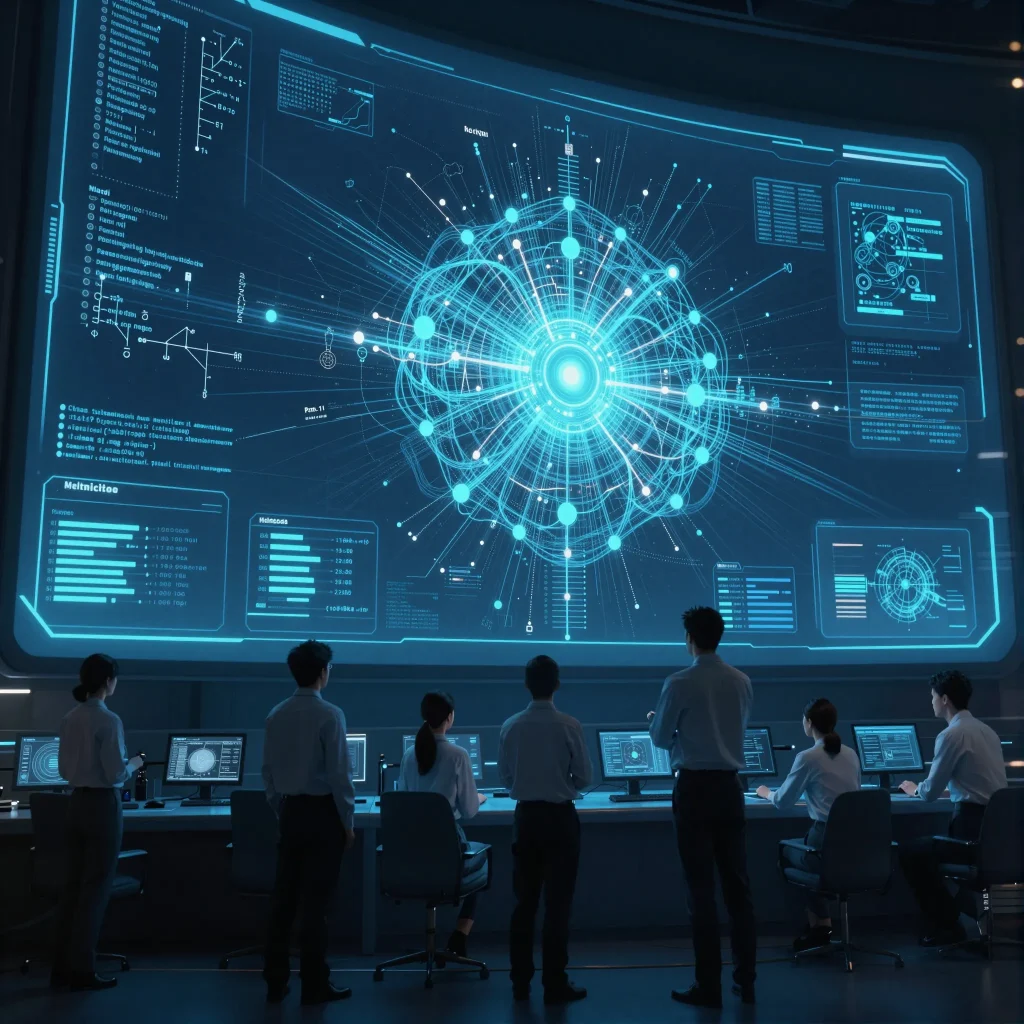
The room was quiet, but something big was happening. Engineers stared at their screens as lines of code turned into responses that felt less like machine output and more like human thought. This moment captured a shift that has been building for years. OpenAI’s latest breakthrough is not just another upgrade. It represents a turning point in how humans and machines work together. From business workflows to creativity and education, the ripple effects are already spreading across industries and continents.
Artificial intelligence has evolved rapidly, but this breakthrough signals a deeper transition. It is no longer just about smarter tools. It is about systems that understand context better, reason more effectively, and adapt to real-world problems with surprising accuracy. For many companies, this marks the beginning of a new era of restructuring, innovation, and competitive pressure.
What Makes This OpenAI Breakthrough Different
Unlike earlier improvements that focused mainly on speed or scale, this new development centers on reasoning, adaptability, and real-world usefulness. The system can handle complex tasks across multiple steps, remember context more accurately, and respond in ways that feel intentional rather than reactive.
This means AI can now assist with advanced research, long-form content creation, business planning, coding logic, and customer support without constant human correction. The breakthrough reduces friction between human intent and machine execution.
How Businesses Are Already Using It
Companies are not waiting around to test the limits. Many have already integrated this new capability into daily operations.
Customer support teams now rely on AI that understands nuanced complaints and responds with empathy. Marketing teams use it to plan campaigns from ideation to execution. Software companies deploy it to debug code, write documentation, and even suggest architectural improvements.
| Business Area | Impact of the Breakthrough |
|---|---|
| Customer Support | Faster and more human like responses |
| Marketing | Better strategy creation and personalization |
| Software Development | Smarter debugging and planning |
| Data Analysis | Deeper insights with less manual effort |
| Education | Personalized learning assistance |
Read More: Step-by-Step Creating Stunning AI-Generated Art in Minutes
Why This Changes the Future of Work
The most profound impact lies in how work itself is changing. Tasks that once required multiple specialists can now be handled by smaller teams using AI as a force multiplier. This does not mean jobs disappear overnight, but roles are evolving quickly.
Employees who know how to collaborate with AI gain an edge. Routine work becomes automated, while strategic thinking, creativity, and oversight become more valuable. Companies that fail to adapt risk falling behind competitors who move faster with leaner teams.
The Global Ripple Effect
This breakthrough is not confined to Silicon Valley. Developers in Africa, Asia, and Europe are building products on top of OpenAI’s technology. Startups now compete globally from day one, using AI to scale faster than ever before.
Governments are also paying attention. As AI becomes more capable, questions about regulation, data protection, and ethical use grow louder. Policymakers are racing to understand what this means for national economies and digital sovereignty.
Read More: The Ultimate AI Productivity Stack Tools That Can Save Hours Daily
Ethical Questions No One Can Ignore
With greater power comes greater responsibility. This breakthrough raises serious questions about trust, bias, and control. If AI can reason better and act more autonomously, who is accountable for its decisions?
OpenAI has emphasized safety and alignment, but public debate continues. Businesses and developers must adopt transparent practices and ensure AI supports human values rather than undermines them.
What This Means for Creators and Entrepreneurs
For creators, this is a golden moment. Writers, designers, video editors, and educators can produce higher-quality work faster. Entrepreneurs can validate ideas, build prototypes, and reach customers without massive budgets.
The barrier to entry is dropping, but competition is increasing. Success now depends on how creatively and responsibly AI is used.
| Opportunity | Advantage |
|---|---|
| Content Creation | Faster production with higher quality |
| Startups | Rapid prototyping and scaling |
| Education | Personalized teaching tools |
| Freelancing | Expanded service offerings |
Read More: How to Automate Your Business Using AI Tools Without Coding
Frequently Asked Questions
Is this OpenAI breakthrough available to everyone?
Access depends on the platform and pricing tier, but many features are gradually rolling out to developers and users.
Will this replace human jobs?
It will change jobs more than replace them. People who adapt and learn AI collaboration will remain valuable.
Is it safe to rely on AI this much?
Safety depends on how it is used. Human oversight and ethical guidelines remain essential.
Can small businesses benefit from this?
Yes. Small teams gain the most because AI reduces cost and increases efficiency.
Conclusion
OpenAI’s new breakthrough is not just another headline. It is a signal that the relationship between humans and machines is entering a new phase. Businesses are restructuring, creators are reimagining workflows, and governments are paying closer attention. Those who understand and adapt early will shape the future, while those who ignore it may struggle to catch up. The question is no longer whether AI will change everything. It already has.

Pingback: Productivity Apps That Will Change How You Work - Latest AI/Tech Info