

How AIVA Is Composing the Future: Can an AI Musician Steal the Show?
The Day the Music Was Rewritten
It was a quiet evening in Paris when Marie, a seasoned film composer, found herself facing a creative block. Her director needed a haunting score for the climax of a psychological thriller. The clock was ticking. Desperate, she turned to a tool she had heard whispers about in creative circles… AIVA, the Artificial Intelligence Virtual Artist.
She fed the AI her ideas, the mood, and some references. Within minutes, AIVA returned a fully orchestrated track, emotional, powerful, and unsettling in all the right places. It wasn’t just usable. It was breathtaking.
That night, Marie did not just meet a deadline. She had a revelation: this was not just a tool. It was a collaborator. AIVA wasn’t just writing music. It was changing the rules of who gets to make music.
What Is AIVA?
AIVA, short for Artificial Intelligence Virtual Artist, is an AI-powered music composition software created in 2016. Initially trained on a vast library of classical scores by composers such as Bach, Beethoven, and Mozart, AIVA has evolved into a versatile digital composer. It now crafts everything from orchestral scores and cinematic soundtracks to pop melodies and video game themes.
But AIVA is more than a codebase that spits out notes. It’s a system trained to understand music’s emotional and structural patterns. Using deep learning and reinforcement learning techniques, AIVA can generate music that resonates with human feelings.
Read More: How Europe Invented the Future— Then Forgot to Build It
The Rise of AI Composers
In the past, music composition was a deeply human craft rooted in emotion, experience, and cultural nuance. But with the rise of artificial intelligence, music creation is no longer limited to conservatory-trained composers.
AIVA is part of a wave of AI musicians that includes tools like Amper Music, Jukedeck, and OpenAI’s MuseNet. What sets AIVA apart is its focus on high-quality orchestration and emotional depth, often making its compositions indistinguishable from human-made music.
It’s being used by:
- Filmmakers who need original scores on tight deadlines
- Game developers looking for adaptive soundtracks
- Content creators seeking affordable royalty-free music
- Musicians experimenting with hybrid human-AI collaboration
And it’s not just background music. AIVA has had compositions performed by live orchestras and has even registered as a composer with a French music rights organization.
How Does AIVA Compose Music?
AIVA’s process is surprisingly close to how a human composer might work, minus the coffee breaks.
- Input and Intent: The user chooses the genre, mood, tempo, and instruments. For example, “romantic classical for a wedding scene.”
- Pattern Recognition: AIVA draws from its database of existing compositions to identify patterns in melody, harmony, rhythm, and dynamics.
- Generation: Using AI models like LSTM (Long Short-Term Memory), it generates new compositions that match the chosen criteria.
- Iteration: Users can tweak and regenerate sections, blending human feedback with AI creativity.
The result? Original compositions that feel intentional, emotionally aligned, and surprisingly human.
Read More: Top AI Tools Revolutionizing Music Production in Nigeria: Elevate Your Sound
Can AIVA Replace Human Musicians?
This is the question that draws both fascination and fear.
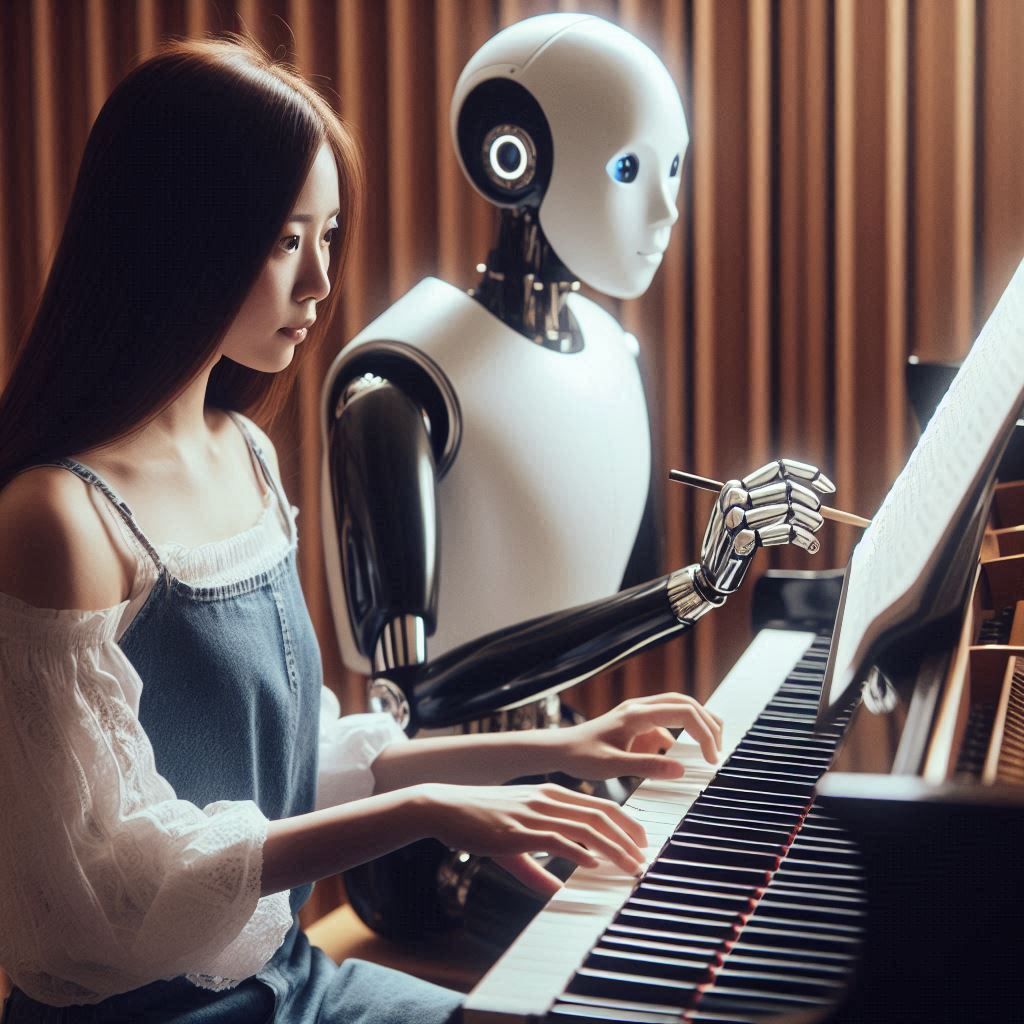
Let’s get one thing straight: AIVA is not here to replace Mozart or Hans Zimmer. It doesn’t compose with personal trauma, joy, or lived experience. But what it can do is speed up workflows, inspire new ideas, and even democratize access to music creation.
Think of it this way: photographers didn’t disappear when smartphones got cameras. What changed was access. Suddenly, everyone had the power to document life. In a similar vein, AIVA puts composition in the hands of indie filmmakers, content creators, and hobbyists who might not know how to write sheet music.
Still, professional musicians and composers are asking hard questions:
- Will AI devalue creative labor?
- Can AI learn enough context to compose for complex cultural stories?
- Should AI-generated works be copyrighted?
The debate is ongoing, but one thing is clear AI musicians are no longer just curiosities. They are collaborators.
Read More: Leading the Future – The Ten Most Technologically Advanced Countries on Earth
FAQs: Everything You Want to Know About AIVA
Q: Can I use AIVA for free?
AIVA offers a free tier for basic compositions, with premium options for more advanced features like higher quality exports and commercial usage rights.
Q: Is the music original?
Yes. AIVA generates entirely original compositions based on your inputs. It does not copy or remix existing music.
Q: Do I own the music AIVA creates for me?
If you’re using a paid plan, yes. Commercial rights are typically granted, but always check AIVA’s licensing terms.
Q: Can I collaborate with AIVA as a human composer?
Absolutely. Many musicians use AIVA to draft melodies or chord progressions, then build upon them creatively.
Q: How realistic does the music sound?
Very. While AIVA doesn’t produce studio-level audio by default, its MIDI output can be used with virtual instruments to create studio-quality results.
The Future of Music Is Hybrid
Back to Marie. Her film was a hit, and the score a collaboration between flesh and code was praised for its emotional resonance. She now uses AIVA regularly, not as a crutch, but as a creative partner.
This is the future of music: hybrid creativity. Human emotion and AI logic. Passion meets precision. Innovation meets intuition.
Whether you’re a seasoned composer or just someone who dreams of scoring your podcast intro, AIVA opens doors. It doesn’t steal the show. It gives you more ways to take the stage.
Final Thoughts
The idea of a machine composing music once sounded like science fiction. Today, it’s reality and it’s expanding what we think is possible in art.
AIVA is not replacing human musicians. It’s reminding us that creativity has always been about collaboration, even if your partner now happens to run on algorithms.
As the tools evolve, so too will the music. The real question isn’t whether AI can steal the show.
It’s whether you’ll let it help you create something unforgettable.


Pingback: Top AI Tools Revolutionizing Music Production in Nigeria: Elevate Your Sound - Newline Tech