

Can AI help firefighters manage wildfires?
Introduction
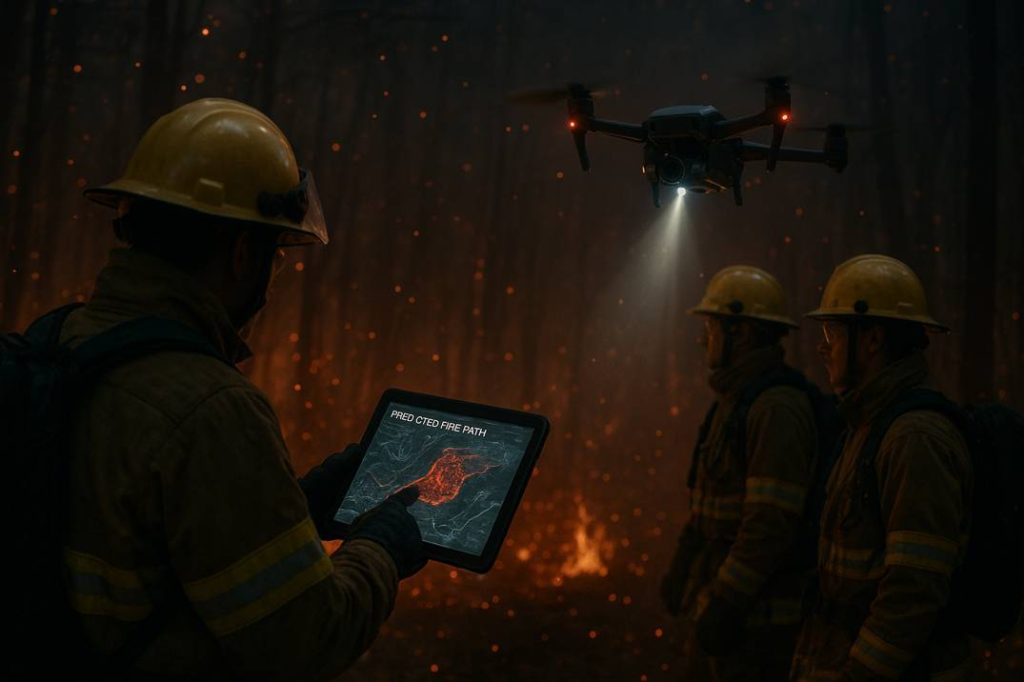
The morning sun glowed orange above the valley, but the crew knew the color was not a promise of peace. The scent of smoke clung to the air even before the first radio call arrived. A fast growing wildfire had crossed a ridge during the night. Flames raced through dry brush toward a small mountain community. In the past the team would rely on maps, memory and instinct to decide where to strike first. Today something new waited inside the command trailer. A screen filled with shifting colors showed predicted fire paths created by a small collection of artificial intelligence models.
As the captain stepped inside he realized he was looking at the future of wildfire response. Real time satellite data, weather predictions and vegetation profiles were all being processed in seconds. The models were advising the crew where to place lines, which communities might soon be threatened and which escape routes were safest. This was not science fiction. It was artificial intelligence supporting human judgement in the most dangerous of environments.
In this article we explore the role of artificial intelligence in modern wildfire management and how it is reshaping the way firefighters plan, protect and respond.
Why Wildfires Are Becoming Harder to Fight
Wildfires are growing more intense for several reasons. Rising temperatures create long dry seasons. Forests hold more dead vegetation than ever before. Communities continue to expand into fire prone areas. Fire crews often face unpredictable wind patterns and fast changing conditions.
These challenges demand tools that process vast amounts of data far faster than people can on their own. This is where artificial intelligence has begun to make a powerful difference.
Read More: Quantum Is Coming: How to Future-Proof Your Career (and Your Code)
How Artificial Intelligence Supports Wildfire Management
Fire Prediction
Artificial intelligence can analyze years of weather data together with satellite observations and vegetation types to forecast where fires are likely to start. This allows agencies to reposition crews before trouble begins.
Fire Spread Modeling
During active fires models can estimate how flames may travel over the next several hours. This information helps determine evacuation timing and resource distribution.
Real Time Monitoring
Sensor networks, drones and satellite imagery feed data to artificial intelligence systems that watch for new ignition points. These networks identify smoke patterns faster than many traditional towers or patrols.
Resource Allocation
Fire commanders often need to decide which areas deserve immediate attention. Smart tools can evaluate fire size, terrain difficulty, population density and road access in seconds to propose efficient response plans.
Firefighter Safety
Artificial intelligence can track crew locations and shifting fire lines. If conditions become unsafe the system can warn teams before danger reaches them.
Table
Key Ways Artificial Intelligence Helps Firefighters
| Task | Benefit | Example Use |
|---|---|---|
| Early detection | Faster discovery of new fires | Automatic smoke recognition from satellite images |
| Fire spread prediction | Better planning and evacuation timing | Displaying expected routes of advancing flames |
| Resource management | More efficient deployment | Assigning engines where they will have the most impact |
| Safety monitoring | Improved crew protection | Alerts when wind shifts create sudden danger |
| Post fire analysis | Better understanding of burn patterns | Mapping damaged zones for recovery work |
Simple Text Based Graph
Increase in Artificial Intelligence Use for Wildfire Response
(Illustration only)
Use Level
100 |
 90 |                                 #####
 80 |                               ###########
 70 |                              ###############
 60 |                            #####################
 50 |                         ############################
 40 |                      ###################################
 30 |                   ##########################################
 20 |            ########################################################
 10 |     ###################################################################
  0 |____________________________________________________________________________
         Year 2015    2017    2019    2021    2023    2025
This simple chart represents the rapid rise in artificial intelligence adoption for wildfire work. Although symbolic it mirrors real trends within global emergency agencies.
Real Stories From The Field
Fire crews in several regions now rely on artificial intelligence models when planning morning briefings. One team noted that predictions often understand wind patterns that even veterans overlook. Another described using smart drone patrols that detect smoke on remote ridges long before helicopters arrive. In many cases these early warnings have prevented dangerous flare ups from becoming full disasters.
Read More: Synthetic Reality: The Rise of AI-Generated Everything
Challenges And Limits
Although powerful, artificial intelligence cannot replace professional judgment. Several challenges remain.
Data quality
Artificial intelligence works best when sensor data is accurate and abundant. Remote areas sometimes lack strong networks.
Unpredictable weather
Sudden storms or wind shifts still surprise even the most advanced systems.
Training and trust
Firefighters must learn how to interpret model results and when to rely on them.
Cost
Sensors, drones and high performance computing systems require investment.
Despite these hurdles, the value is increasing every year.
Frequently Asked Questions
Can artificial intelligence predict exactly when a wildfire will start
No system can offer perfect certainty but artificial intelligence can identify high risk zones far more accurately than older methods.
Does artificial intelligence replace firefighters
Not at all. Artificial intelligence supports humans but cannot take their place. Firefighters bring experience courage and complex decision making skills that no model can match.
Can artificial intelligence improve evacuation planning
Yes. Prediction tools can estimate which communities face the earliest threat and help move people to safety before conditions worsen.
Are artificial intelligence systems reliable in extreme weather
They are improving quickly but surprises can still occur. Tools are most effective when paired with skilled human interpretation.
How expensive is artificial intelligence for fire agencies
Costs vary widely. Many regions begin with smaller systems such as smoke recognition software before expanding to drones and sensor networks.
Conclusion
Artificial intelligence is becoming one of the most valuable companions modern firefighters can have. It processes information at speeds no person can match. It guides crews toward safer and more strategic decisions. It saves time and in many cases it saves lives. But its greatest power emerges when combined with human strength and insight.
As fire seasons grow longer and flames grow more intense it is clear that the future of wildfire response will rely on both experienced hands and intelligent tools. Artificial intelligence is not replacing the bravery of those on the frontline. It is giving them a sharper clearer understanding of the forces they face. And that partnership just may be the key to protecting our forests our communities and the people who risk everything to keep them safe.



Pingback: Mark Zuckerberg’s AI Gamble: Can Meta Win the Race Against OpenAI and Google? - Latest AI/Tech Info