

AI and the Future of Elections in Nigeria: A Game Changer for Democracy
Introduction to AI in the Context of Nigerian Elections
Artificial Intelligence (AI) is reshaping the landscape of elections worldwide.
This transformation is particularly significant in Nigeria, where challenges exist.
Nigeria’s election process has often faced issues such as fraud and inefficiency.
AI offers innovative solutions to address these challenges effectively.
Firstly, AI can enhance voter registration processes. It can streamline data collection and verification with precision.
For instance, AI-driven systems can reduce errors in voter lists.
This leads to a more reliable electoral roll.
Secondly, AI can improve voter education initiatives.
Utilizing machine learning algorithms, it can tailor messages for various demographics.
As a result, more citizens will understand the voting process, encouraging participation.
Furthermore, AI can bolster election security measures.
It can analyze patterns to detect possible election-related crimes.
This proactive approach deters fraud before it occurs.
Moreover, AI plays a crucial role in enhancing transparency.
By analyzing social media and public sentiment, AI provides insights during elections.
This data helps stakeholders assess the election’s integrity.
AI’s application doesn’t stop there.
Its potential extends to predicting electoral outcomes based on data trends.
Such predictions can guide political strategies and campaign efforts.
Additionally, AI aids in the quick processing of election results.
Automated systems can tally votes faster than traditional methods.
This efficiency ensures timely disclosures of election outcomes.
Ultimately, AI represents a game changer for democracy in Nigeria.
Its integration into the electoral process promotes fairness and accountability.
As AI technology evolves, so too will its impact on Nigerian elections.
Stakeholders must embrace these advances for a brighter democratic future.
Historical Overview of Election Processes in Nigeria
The electoral history of Nigeria is rich and complex.
Initially, the country operated under colonial rule, which impacted its governance.
In 1954, Nigeria gained a degree of self-governance through the Lyttleton Constitution.
This marked a significant shift towards democratic processes.
First Republic and Early Elections
The first general elections occurred in 1954.
These elections were influenced by regional politics and ethnic divisions.
The result led to the formation of Nigeria’s first elected government.
However, military coups interrupted this democratic experiment.
Military Rule and the Return to Democracy
From 1966 onward, Nigeria experienced decades of military governance.
The military regimes suppressed democratic practices and civil liberties.
In 1999, Nigeria returned to democracy after years of dictatorship.
This transition was met with widespread public enthusiasm.
Post-1999 Elections and Democratic Struggles
Since 1999, Nigeria has conducted several elections.
Many of these elections faced allegations of fraud and violence.
Political parties often engaged in intense competition driven by ethnic loyalties.
International observers have frequently monitored these elections.
Recent Developments in Electoral Processes
The introduction of technology has begun to reshape elections.
Electronic voter registration and biometric systems emerged to enhance transparency.
In recent years, the Independent National Electoral Commission (INEC) has implemented reforms.
These reforms aim to strengthen electoral integrity and promote public trust.
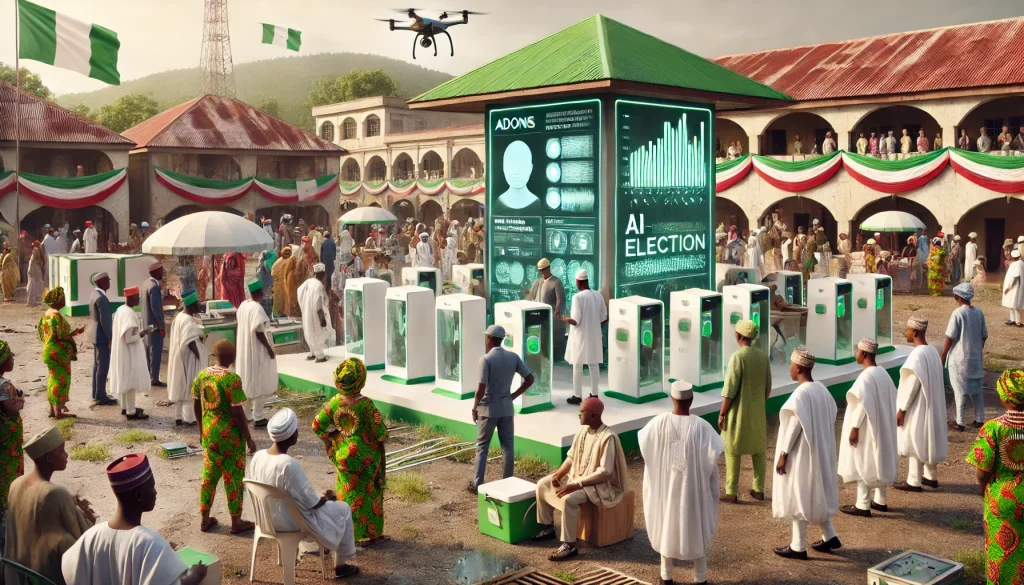
The Role of Technology in Enhancing Electoral Integrity
Introduction to Technological Advancements
Technology plays a pivotal role in modern elections.
It enhances transparency and accountability in the electoral process.
Additionally, technology reduces the chances of election fraud.
Data Security Measures
The integrity of elections relies heavily on data security.
Advanced encryption methods protect voter information.
Moreover, secure databases prevent unauthorized access to sensitive data.
These measures instill trust among voters in the electoral system.
Electronic Voting Systems
Electronic voting systems streamline the voting process.
They facilitate easier access for voters, ensuring higher turnout rates.
Furthermore, these systems provide real-time results, speeding up the counting process.
This efficiency helps to diminish uncertainty during elections.
Voter Verification Technologies
Voter verification technologies enhance the identification process.
Biometric systems, such as fingerprint scanning, improve accuracy.
They ensure that each vote is cast by an eligible voter.
Consequently, these technologies reduce impersonation and double voting.
Social Media and Voter Engagement
Social media platforms serve as powerful tools for voter engagement.
They provide vital information about elections and candidates.
Moreover, social media promotes civic awareness and participation.
This increased engagement helps to create an informed electorate.
Monitoring and Reporting Tools
Monitoring tools utilize technology for real-time observation of elections.
They help in identifying irregularities as they occur.
Additionally, reporting tools provide citizens with up-to-date information on electoral processes.
This capability allows for immediate response to any challenges faced.
Technology’s Promise for Fair Elections
The integration of technology is a game changer for electoral integrity.
It promises a more transparent and fair electoral process in Nigeria.
As technology evolves, so will the capabilities to secure and enhance democracy.
How AI Can Improve Voter Registration and Turnout
Streamlined Voter Registration Processes
AI technologies enhance voter registration efficiency.
They simplify the application process for citizens.
For instance, chatbots can assist individuals in real time.
Furthermore, they collect data about potential voters.
This data helps identify those in need of support.
Thus, it encourages higher registration rates.
Targeted Outreach Campaigns
AI can analyze demographic data effectively.
This analysis reveals groups that are underrepresented.
Upon identifying these groups, tailored outreach can occur.
Consequently, resources focus on areas needing more voter engagement.
As a result, voter turnout improves significantly.
Improved Accessibility for All Voters
AI tools can make voting more accessible for disabled individuals.
Innovative platforms offer voice-activated assistance.
This makes it easier for everyone to participate.
Moreover, AI helps in developing multilingual voting materials.
This ensures that language barriers do not hinder participation.
Real-time Feedback Mechanisms
AI enables real-time feedback from voters.
Surveys conducted through AI systems gather insights instantly.
This feedback allows organizations to address concerns promptly.
In turn, it fosters trust in the electoral process.
Establishing trust encourages higher voter turnout.
Data Security and Integrity
AI strengthens the security of voter data.
Advanced algorithms can detect fraudulent activities quickly.
Consequently, the integrity of the voter registration process improves.
Voters feel safer knowing their information is protected.
This sense of security prompts more people to register and vote.
Using AI for Real-Time Monitoring and Fraud Detection During Elections
Overview of AI in Election Monitoring
Artificial Intelligence revolutionizes the way we monitor elections.
It enables rapid analysis of election data in real time.
Additionally, AI tools can detect unusual patterns that signal fraud.
Benefits of Real-Time Monitoring
Real-time monitoring increases transparency in electoral processes.
It enhances trust among voters and stakeholders.
This proactive approach allows immediate responses to irregularities.
As a result, the integrity of the election is upheld.
Data Collection and Analysis
AI systems can gather vast amounts of electoral data quickly.
Machine learning algorithms analyze this data for discrepancies.
By identifying anomalies, AI assists in flagging potential fraud.
Communication and Reporting
AI-powered platforms provide real-time updates to election observers.
This ensures transparency throughout the electoral process.
Moreover, automated reporting systems facilitate faster dissemination of findings.
Fraud Detection Mechanisms
AI employs various techniques to identify fraud patterns.
It uses historical data to train its algorithms effectively.
Consequently, it can recognize unauthorized voting and ballot stuffing.
Facial Recognition Technology
Facial recognition aids in verifying voter identities at polling stations.
This technology reduces impersonation and double voting incidents.
Furthermore, it streamlines the authentication process for voters.
Social Media Analysis
AI tools analyze social media for misinformation related to elections.
By monitoring trends, they can address potential public unrest.
Additionally, identifying fake news helps maintain informed public discourse.
Challenges and Considerations
Despite its advantages, AI implementation faces challenges.
Data privacy and security remain crucial concerns.
Moreover, biased algorithms can lead to unfair outcomes in elections.
Hence, continuous evaluation of AI systems is essential.
Regulatory Frameworks
Governments must establish regulations governing AI use in elections.
Clear guidelines ensure ethical practices and accountability.
This framework can build public confidence in AI applications during elections.
Collaboration with Stakeholders
Collaboration among tech companies, governments, and civil society is vital.
Sharing best practices can enhance the effectiveness of AI tools.
Additionally, stakeholder involvement ensures that technology serves the public interest.

Predictive Analytics in Forecasting Election Outcomes and Trends
Understanding Predictive Analytics
Predictive analytics involves using data to make informed forecasts.
It utilizes statistical algorithms and machine learning techniques.
These methods identify patterns from historical data.
Moreover, they predict future outcomes based on these patterns.
Application in Nigerian Elections
Nigeria’s political landscape can greatly benefit from predictive analytics.
For instance, analysts can use data to forecast voter turnout.
This information allows political parties to strategize effectively.
Additionally, it helps candidates understand regional dynamics.
Benefits of Predictive Analytics
Predictive analytics offers numerous advantages for elections.
- It enhances data-driven decision-making.
- Furthermore, it increases transparency in the electoral process.
- It allows for targeted campaign strategies.
As a result, candidates can allocate resources more effectively.
Challenges and Considerations
Despite its advantages, predictive analytics faces challenges.
Data integrity is a significant concern.
Inaccurate or biased data may lead to misleading predictions.
Thus, stakeholders must ensure the reliability of data sources.
The Future of Elections in Nigeria
The future of elections in Nigeria looks promising with predictive analytics.
As technology advances, the capabilities of analytics will expand.
Voter engagement could see a significant boost.
Moreover, improved predictions can lead to more peaceful elections.
Challenges and Ethical Considerations of Implementing AI in Nigerian Elections
Data Privacy Concerns
The use of AI requires vast amounts of data.
This data often includes personal information of voters.
Consequently, ensuring data privacy is paramount.
Data breaches can lead to misuse and manipulation of information.
Furthermore, inadequate regulations can exacerbate these risks.
Bias in AI Algorithms
AI systems can inadvertently perpetuate biases.
Pre-existing societal biases may influence algorithmic decisions.
This bias can lead to unfair treatment of certain groups.
Moreover, transparency in AI development is essential.
Thus, stakeholders must scrutinize AI systems for fairness.
Infrastructure Challenges
Nigeria faces significant infrastructure limitations.
Weak internet connectivity hinders effective AI deployment.
Additionally, unreliable electricity supply disrupts operations.
These challenges can impede the smooth implementation of AI tools.
Solutions must address these infrastructural gaps for success.
Legal and Regulatory Framework
The legal framework surrounding AI is still in development.
There is a lack of comprehensive laws governing AI use.
Furthermore, existing laws may not address new AI technologies.
Stakeholders must advocate for robust regulatory frameworks.
Such frameworks should prioritize accountability and transparency.
Public Trust and Acceptance
Building public trust is essential for AI acceptance.
Many Nigerians may feel uneasy about AI technologies.
Engagement through education can alleviate concerns.
Furthermore, demonstrating the benefits of AI is key.
Ultimately, citizen involvement can foster a supportive environment.
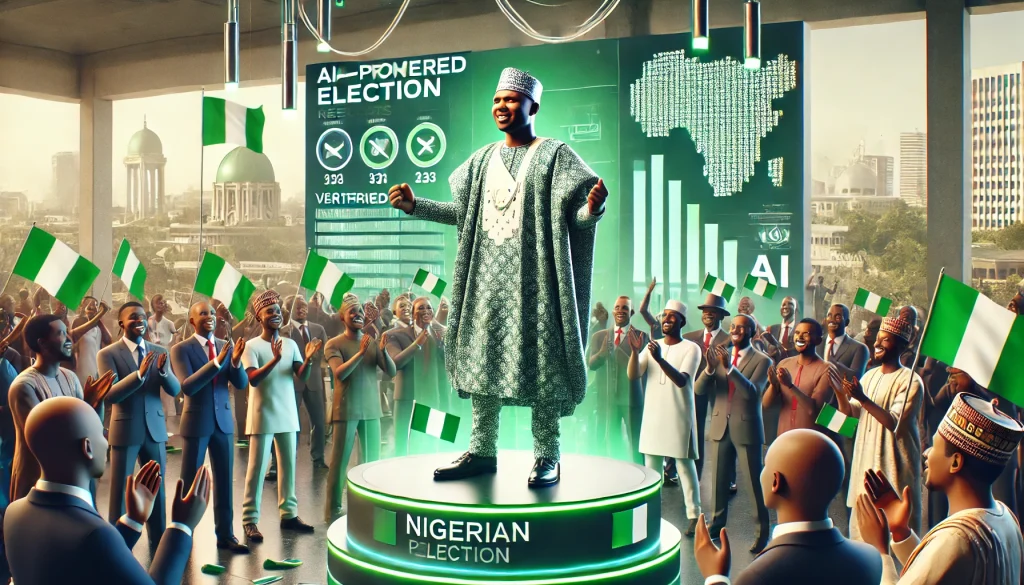
The Future Landscape of Democracy in Nigeria with AI Integration
Enhanced Voter Engagement
AI technologies can significantly boost voter engagement in Nigeria.
Platforms leveraging AI can interact with citizens more effectively.
For instance, chatbots can answer voting-related questions instantly.
Moreover, personalized messages can motivate citizens to participate.
This approach can foster a more informed electorate.
Streamlined Electoral Processes
The integration of AI can streamline various electoral processes.
AI can enhance voter registration through automated systems.
In addition, it can verify identities quickly and accurately.
This reduces the likelihood of fraud and errors in the system.
Consequently, elections become more transparent and reliable.
Aiding Electoral Monitoring
AI can assist in monitoring elections for fairness and integrity.
Machine learning algorithms can analyze large datasets in real-time.
They can identify irregularities or reporting discrepancies swiftly.
This capability helps regulatory bodies address issues promptly.
Ultimately, it promotes trust in the electoral process.
Combating Misinformation
AI can play a crucial role in combating misinformation during elections.
Advanced algorithms can detect fake news and disinformation campaigns.
They can flag inaccurate content before it spreads widely.
By promoting fact-based information, AI empowers informed voting decisions.
This is vital for a healthy democratic process in Nigeria.
Future-Proofing Democracy
As Nigeria adopts AI, it modernizes its approach to democracy.
These technologies prepare the electoral system for upcoming challenges.
Smart solutions ensure that elections remain relevant and efficient.
AI integration heralds a new era for democracy in Nigeria.
This future holds the promise of more inclusive and fair elections.

Pingback: Transforming Nigeria's Healthcare System with AI: Possibilities and Challenges - Newline Tech