
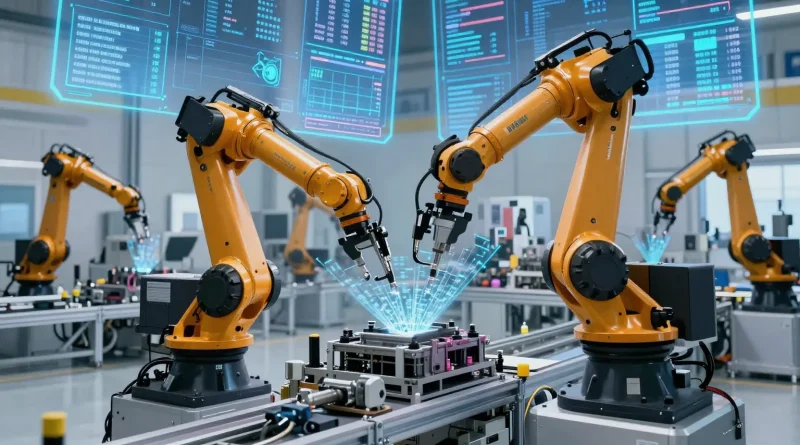
Siemens and NVIDIA Expand Strategic Partnership to Build an Industrial AI Operating System
Introduction
Inside a modern factory, machines no longer simply follow fixed instructions. They sense, analyze, and adapt in real time. This transformation has been building quietly for years, but it is now accelerating at an unprecedented pace.
Siemens and NVIDIA have announced an expanded strategic partnership aimed at creating a full industrial AI operating system. By combining Siemens’ deep expertise in industrial automation with NVIDIA’s AI computing platforms, the two companies are laying the foundation for smarter, faster, and more autonomous manufacturing systems worldwide.
What This Siemens and NVIDIA Partnership Is About
The expanded partnership focuses on embedding advanced AI directly into industrial environments. Rather than treating AI as an external add-on, Siemens and NVIDIA want intelligence to live at the core of factory operations.
This industrial AI operating system will support simulation, automation, robotics, and real-time decision making across manufacturing workflows.
Why Industrial AI Matters Right Now
Manufacturing faces increasing pressure to improve efficiency, reduce downtime, and adapt quickly to market changes. Traditional automation systems struggle with flexibility.
Industrial AI solves this by enabling machines and systems to learn from data, predict failures, and optimize processes continuously.
How NVIDIA Technology Powers the Vision
NVIDIA provides the AI backbone for this initiative. Its GPUs, AI frameworks, and industrial platforms enable high-performance computing at scale.
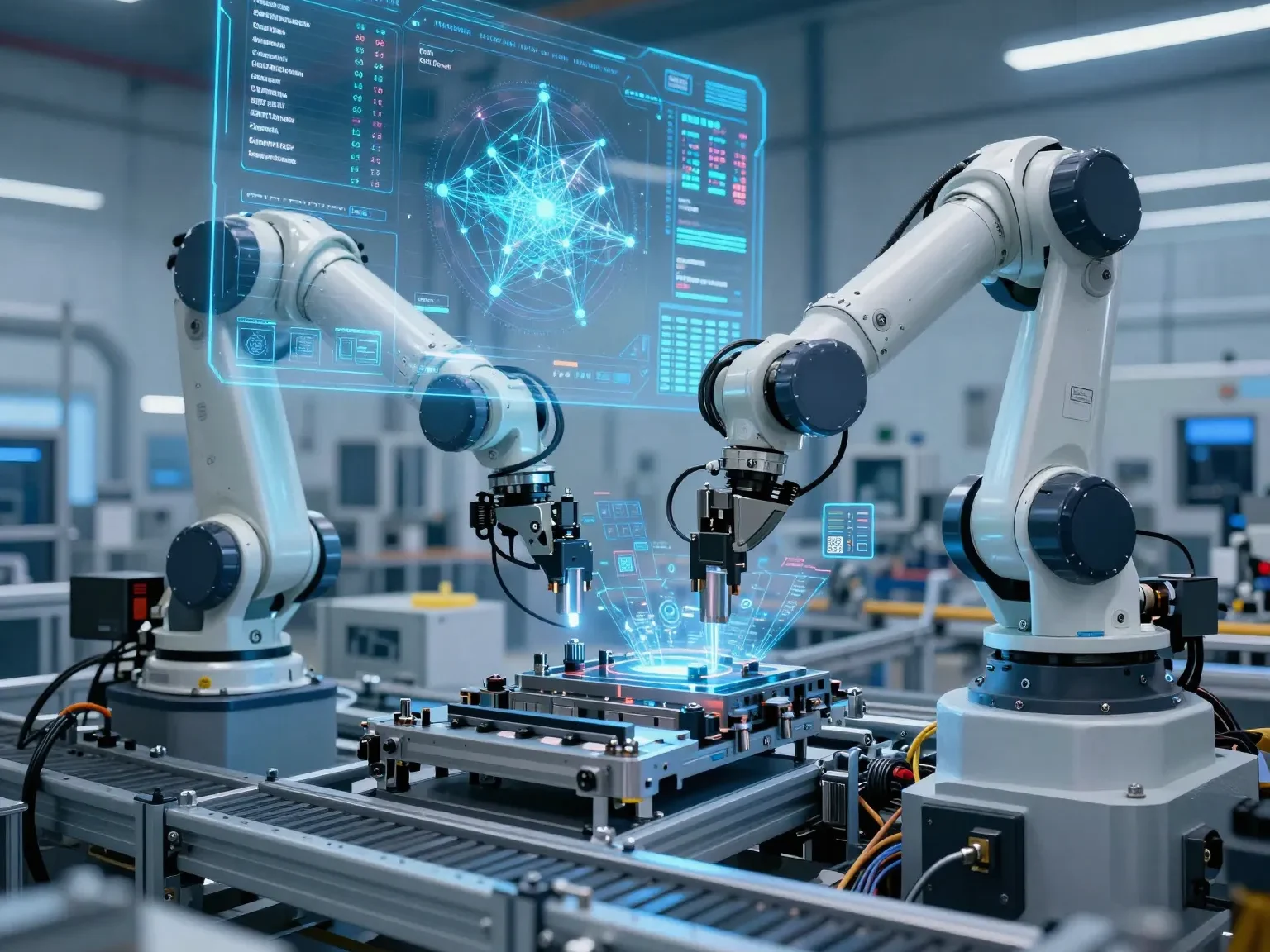
Technologies like NVIDIA Omniverse allow companies to create digital twins of factories. These virtual models simulate operations, test changes, and predict outcomes before real-world deployment.
Read More: The Home Depot and Google Cloud Launch Agentic AI Tools to Transform Customer Support
Siemens’ Role in Industrial Automation
Siemens brings decades of experience in industrial software, automation hardware, and operational technology. Its systems already run factories, power grids, and transportation networks globally.
By integrating AI into Siemens platforms, manufacturers gain intelligence without replacing existing infrastructure.
Key Capabilities of the Industrial AI Operating System
| Capability | Industrial Benefit |
|---|---|
| Digital twins | Safer testing and faster innovation |
| Predictive maintenance | Reduced downtime and repair costs |
| AI-driven automation | Smarter production workflows |
| Real-time analytics | Faster decision making |
| Scalable AI infrastructure | Future-ready manufacturing |
These capabilities turn factories into adaptive systems rather than static environments.
Read More: Google and Khan Academy Partner to Launch Gemini-Powered Writing Coach for Students
How This Impacts Manufacturing and Automation
Factories will shift from reactive maintenance to predictive operations. Robots will adapt to changing tasks. Production lines will optimize themselves based on demand and performance data.
This transformation reduces waste, increases output, and improves product quality across industries.
Comparison With Traditional Industrial Systems
| System Type | Limitations | AI Advantage |
|---|---|---|
| Traditional automation | Fixed rules and limited flexibility | Adaptive and learning systems |
| Manual optimization | Slow and error-prone | Real-time AI optimization |
| Isolated machines | Poor data sharing | Connected intelligent ecosystems |
The difference lies in intelligence, not just automation.
What This Means for the Future of Smart Factories
This partnership signals a move toward fully autonomous industrial environments. As AI becomes embedded at the operating system level, factories will gain unprecedented levels of insight and control.
Manufacturers that adopt these systems early will gain a competitive edge in speed, efficiency, and innovation.
Read More: Global AI Regulations Are Coming — Are You Ready?
Frequently Asked Questions
What is an industrial AI operating system?
It is a platform that embeds AI into industrial processes, enabling automation, learning, and real-time decision-making.
Why did Siemens partner with NVIDIA?
NVIDIA provides the high-performance AI computing needed to power complex industrial applications.
Will this replace existing factory systems?
No. It enhances and integrates with current automation and control systems.
Which industries benefit the most?
Manufacturing, automotive, energy, logistics, and heavy industry benefit significantly.
Conclusion
The expanded partnership between Siemens and NVIDIA represents a major milestone in industrial AI. By building an AI operating system for factories, they are redefining how automation, simulation, and intelligence come together.
As manufacturing enters a new era, this collaboration shows that the future of industry is not just automated. It is intelligent, adaptive, and AI-driven.


Pingback: Accenture and Anthropic Launch Multi-Year Enterprise AI Partnership to Scale Claude Adoption - Latest AI/Tech Info