

Tesla Integrates Advanced AI Vision Systems to Improve Full Self-Driving Software
Introduction
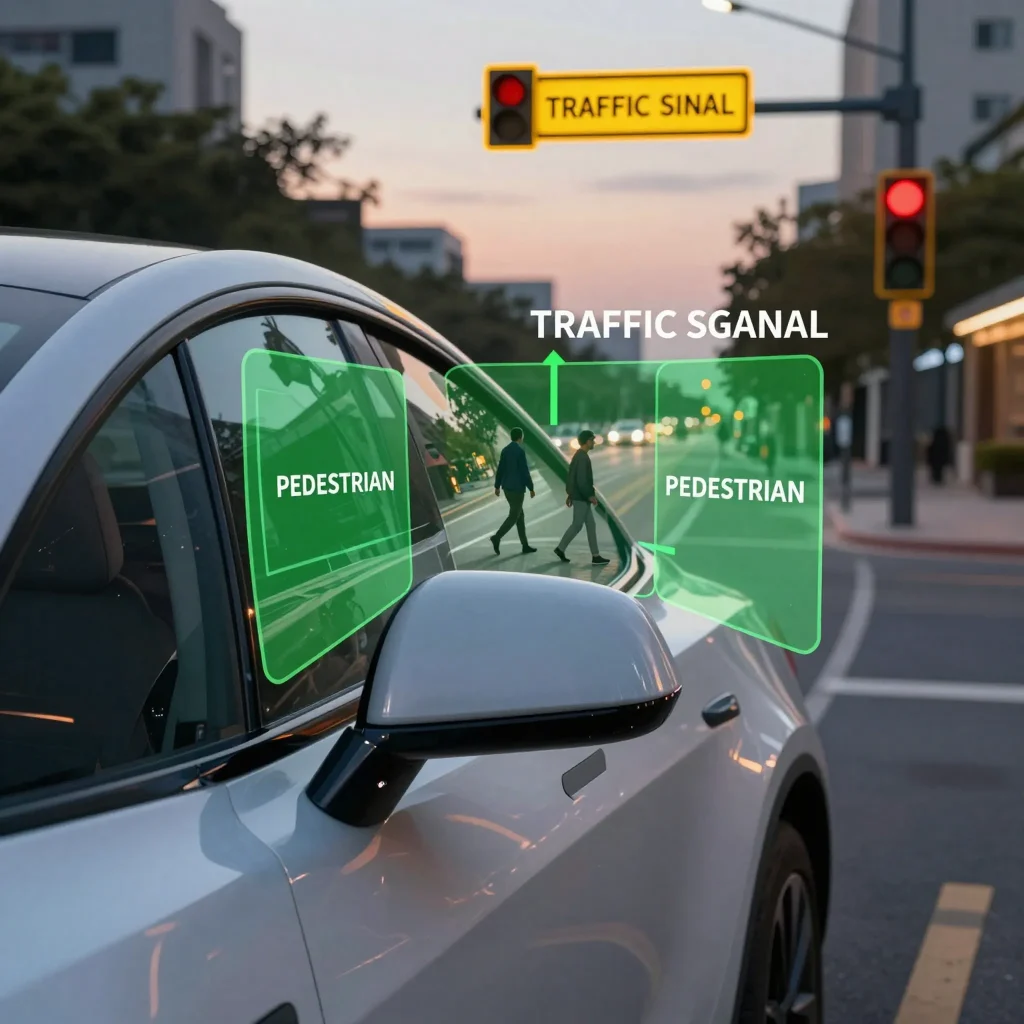
Imagine a car that doesn’t just follow GPS instructions — it understands the road the way a human driver does. It detects pedestrians, predicts vehicle behavior, reads traffic lights, and reacts in milliseconds.
That’s the vision behind the latest advancements in Full Self-Driving technology.
Now, Tesla is integrating more advanced AI vision systems into its Full Self-Driving (FSD) software, aiming to push autonomous driving closer to everyday reality.
What Is Tesla’s AI Vision System?
Tesla’s approach to autonomy relies heavily on computer vision rather than lidar.
Its AI vision system uses:
- Multiple high-resolution cameras
- Neural networks trained on real-world driving data
- Edge AI processing inside the vehicle
- Over-the-air software updates
Instead of relying on expensive hardware sensors, Tesla focuses on AI models that interpret visual data similarly to how human drivers perceive the road.
How Full Self-Driving (FSD) Works
Tesla Full Self-Driving is an advanced driver-assistance system designed to handle:
- Highway lane changes
- Traffic light recognition
- City street navigation
- Parking assistance
- Autopilot steering
The latest AI vision upgrades aim to improve real-time reasoning, object detection accuracy, and decision-making in complex environments.
Why Advanced AI Vision Matters
Autonomous vehicles must process enormous amounts of visual information instantly.
Advanced AI vision improves:
- Pedestrian detection accuracy
- Lane boundary recognition
- Weather adaptability
- Night-time driving performance
- Complex urban navigation
By refining neural networks, Tesla aims to reduce human intervention and enhance safety.
Read More: Adobe Adds Firefly AI to Photoshop and Premiere Pro for Creative Automation
Table: Traditional ADAS vs Tesla’s AI Vision Approach
| Feature | Traditional ADAS | Tesla AI Vision System | Advantage |
|---|---|---|---|
| Primary Sensors | Radar & Lidar | Camera-based vision | Lower hardware cost |
| Data Processing | Limited onboard AI | Advanced neural networks | Smarter interpretation |
| Updates | Manual or dealership | Over-the-air updates | Continuous improvement |
| Learning Model | Pre-programmed rules | Machine learning-based | Adaptive driving behavior |
| Scalability | Hardware dependent | Software-driven | Faster global rollout |
Read More: IBM Expands Watsonx Platform to Help Enterprises Build Custom AI Models
AI Infrastructure Behind the Scenes
Tesla trains its neural networks using massive real-world datasets collected from its vehicle fleet.
Key elements include:
- High-performance AI training clusters
- Custom AI chips for in-car processing
- Edge computing capabilities
- Continuous model retraining
This software-first approach enables Tesla to push improvements without redesigning hardware systems frequently.
Competitive Landscape
Tesla’s AI-driven strategy competes with autonomous efforts from other technology and automotive companies.
While some competitors rely heavily on lidar mapping systems, Tesla emphasizes scalable AI vision powered by large-scale data collection.
The debate between vision-only systems and multi-sensor approaches remains central in the autonomous vehicle industry.
Safety and Regulatory Considerations
Autonomous driving technology must meet strict safety standards and regulatory approval.
Tesla continues to test and refine FSD features, but driver supervision is still required in most markets.
AI advancements improve capability, but full autonomy remains a developing goal rather than a universal reality.
Business Implications
Advanced AI vision integration could:
- Increase vehicle value through software upgrades
- Strengthen Tesla’s competitive advantage
- Support subscription-based FSD revenue models
- Reduce dependency on expensive sensor hardware
- Accelerate global adoption of semi-autonomous driving
Software-driven improvements create long-term scalability opportunities.
Read More: NVIDIA Launches New AI Chips to Power Next-Generation Data Centers
Frequently Asked Questions
Does Tesla use lidar in its AI vision system?
Tesla primarily relies on camera-based vision systems rather than lidar.
Is Full Self-Driving fully autonomous?
No. Tesla’s FSD currently requires driver supervision.
How does Tesla improve its AI systems?
Through real-world driving data, neural network training, and over-the-air software updates.
Are AI vision systems safer than traditional systems?
AI vision systems aim to improve safety, but ongoing testing and regulatory oversight remain essential.
Conclusion
Tesla’s integration of advanced AI vision systems into Full Self-Driving software represents a bold software-first strategy in autonomous mobility. By prioritizing neural networks and real-world data, the company continues to refine how vehicles interpret and respond to their environments.
While fully autonomous driving remains an evolving milestone, Tesla’s AI vision advancements highlight the growing role of machine learning in shaping the future of transportation.


Pingback: OpenAI Launches ChatGPT Atlas AI Browser That Can Browse and Complete Tasks for Users - Latest AI/Tech Info
Pingback: Google Releases Gemini 3.1 Pro With Advanced Reasoning - Latest AI/Tech Info