

Unleashing the Power of Now: Real-Time Image Recognition with Open Source AI Libraries in Python
The world is a blur of fleeting moments, a constant stream of visual information demanding instant interpretation.
From autonomous vehicles navigating bustling streets to security systems detecting anomalies in real-time, the ability to process and understand images as they happen is no longer a futuristic fantasy but a pressing necessity.
And at the heart of this revolution lies the potent combination of open-source AI libraries and the versatile Python programming language.
Forget cumbersome, proprietary software and exorbitant licensing fees.
Today, a vibrant ecosystem of free, accessible tools empowers developers to build sophisticated real-time image recognition systems with unparalleled flexibility and speed.
We’re talking about deploying object detection in live video feeds, analyzing facial expressions in real-time interactions, and even automating quality control on fast-moving production lines – all powered by the collaborative spirit of open-source innovation.
This article dives deep into the realm of open-source AI libraries for real-time image recognition in Python, exploring the most powerful tools, their strengths, and how to leverage them for your specific applications.
Whether you’re a seasoned developer or a curious enthusiast, prepare to unlock the potential of real-time vision and transform your projects with the power of open source.
The Pillars of Real-Time Vision: Key Libraries and Their Strengths
The landscape of open-source AI for image recognition is rich and diverse, offering a plethora of libraries tailored to different needs.
Here, we focus on the cornerstones for real-time applications:
1. OpenCV (Open Source Computer Vision Library): The Workhorse of Image Processing
No discussion of image recognition in Python is complete without OpenCV.
This mature and highly optimized library provides a comprehensive suite of tools for image and video processing. Its strengths lie in:
- Speed and Efficiency: Written in C++ with Python bindings, OpenCV is designed for performance, making it ideal for real-time applications.
- Comprehensive Functionality: From basic image manipulation (resizing, cropping) to advanced feature detection (edge detection, object tracking), OpenCV covers a vast spectrum of image processing tasks.
- Hardware Acceleration: OpenCV supports hardware acceleration through CUDA and OpenCL, further boosting performance on compatible systems.
- Integration with Other Libraries: It seamlessly integrates with other AI libraries like TensorFlow and PyTorch, enabling complex workflows.
For real-time applications, OpenCV’s ability to handle video streams efficiently is crucial.
It allows you to capture frames from cameras or video files, process them in real-time, and display the results with minimal latency.
2. TensorFlow and TensorFlow Lite: Deep Learning Powerhouse for Real-Time Inference
TensorFlow, Google’s open-source machine learning framework, has become a dominant force in deep learning.
Its strengths include:
- Pre-trained Models: TensorFlow Hub provides a vast library of pre-trained models for various image recognition tasks, saving you the effort of training from scratch.
- Model Optimization: TensorFlow Lite is specifically designed for deploying models on resource-constrained devices like mobile phones and embedded systems, making it perfect for real-time edge computing.
- Custom Model Training: TensorFlow empowers you to train custom models tailored to your specific needs, allowing for fine-grained control over accuracy and performance.
- TensorRT Integration: TensorFlow integrates with NVIDIA TensorRT for high-performance inference on NVIDIA GPUs.
For real-time image recognition, TensorFlow Lite plays a vital role in bringing deep learning to edge devices, enabling applications like real-time object detection on smartphones or in IoT devices.

3. PyTorch: The Dynamic and Flexible Deep Learning Framework
PyTorch, developed by Facebook’s AI Research lab, has gained immense popularity for its dynamic computation graph and ease of use. Its strengths include:
- Dynamic Computation Graph: PyTorch’s dynamic graph allows for greater flexibility in model development and debugging, particularly for complex architectures.
- Extensive Pre-trained Models: PyTorch Hub provides a rich collection of pre-trained models for various image recognition tasks.
- TorchScript: TorchScript enables the serialization and optimization of PyTorch models for deployment in production environments, including real-time applications.
- Strong Community Support: PyTorch boasts a vibrant and active community, providing ample resources and support for developers.
PyTorch’s flexibility and ease of use make it a powerful tool for developing and deploying custom real-time image recognition models.
4. Scikit-learn: Classic Machine Learning for Efficient Feature Extraction
While deep learning dominates many image recognition tasks, traditional machine learning algorithms from Scikit-learn can still be valuable, especially for tasks that require efficient feature extraction and classification.
Scikit-learn’s strengths include:
- Simple and Intuitive API: Scikit-learn offers a user-friendly API, making it easy to implement various machine learning algorithms.
- Efficient Algorithms: Scikit-learn’s algorithms are optimized for performance, making them suitable for real-time applications.
- Feature Extraction Tools: Scikit-learn provides tools for extracting features from images, such as Histogram of Oriented Gradients (HOG) and Local Binary Patterns (LBP).
For applications like facial expression recognition or simple object classification, Scikit-learn can provide a lightweight and efficient alternative to deep learning.
Building a Real-Time Image Recognition Pipeline
Creating a real-time image recognition system involves several key steps:
- Image Acquisition: Capturing images from a camera, video file, or other input source. OpenCV is typically used for this purpose.
- Preprocessing: Preparing the images for analysis by resizing, cropping, converting to grayscale, or applying other transformations.
- Feature Extraction: Extracting relevant features from the images. This can involve using techniques from OpenCV, Scikit-learn, or deep learning models.
- Object Detection/Classification: Identifying and classifying objects in the images using a trained model.
- Post-processing: Refining the results, such as drawing bounding boxes around detected objects or displaying labels.
- Real-Time Display: Displaying the processed images and results in real-time.
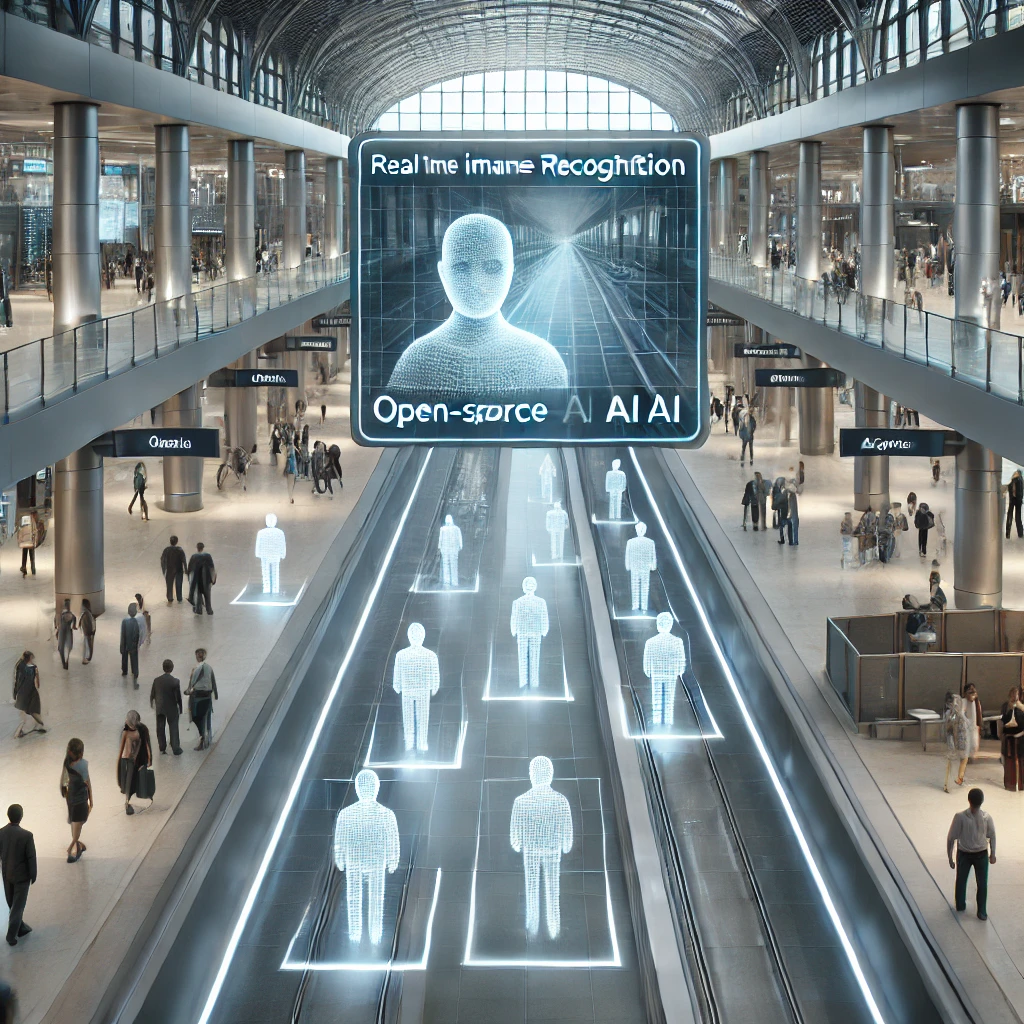
Practical Examples and Use Cases
- Real-Time Object Detection in Surveillance Systems: Using TensorFlow Lite and OpenCV to detect and track objects in live video feeds for security applications.
- Automated Quality Control on Production Lines: Employing PyTorch and OpenCV to inspect products for defects in real-time, improving efficiency and reducing costs.
- Facial Expression Recognition for Human-Computer Interaction: Using Scikit-learn and OpenCV to analyze facial expressions in real-time, enabling more intuitive and responsive interfaces.
- Autonomous Vehicle Navigation: Using deep learning models and OpenCV to detect and track obstacles in real-time, enabling safe and reliable navigation.
- Real-Time Augmented Reality Applications: Overlaying virtual objects onto real-world images using real-time image recognition.
Overcoming Challenges in Real-Time Image Recognition
- Latency: Minimizing processing time is crucial for real-time applications. Techniques like model optimization, hardware acceleration, and efficient algorithms can help reduce latency.
- Computational Resources: Real-time image recognition can be computationally intensive, especially for deep learning models. Optimizing models for resource-constrained devices and leveraging cloud computing can address this challenge.
- Accuracy: Achieving high accuracy in real-time applications can be challenging due to factors like lighting conditions, occlusions, and variations in object appearance. Robust algorithms and well-trained models are essential.
The Future of Open Source AI for Real-Time Vision
The field of open-source AI for real-time image recognition is rapidly evolving, with ongoing research and development leading to new breakthroughs.
We can expect to see:
- Improved Model Optimization: More efficient algorithms and techniques for deploying deep learning models on edge devices.
- Enhanced Hardware Acceleration: Wider adoption of hardware acceleration technologies like GPUs and TPUs for real-time inference.
- Increased Accessibility: More user-friendly tools and resources for developers of all skill levels.
- Greater Integration with Cloud Computing: Seamless integration of cloud-based AI services for real-time image recognition.
Take Action: Build Your Real-Time Vision Project Today!
The power to transform the world through real-time image recognition is within your reach.
With the wealth of open-source AI libraries available in Python, you can build innovative applications that solve real-world problems.
Don’t wait for the future; create it. Start exploring the libraries discussed in this article, experiment with different algorithms and models, and build your own real-time vision project.
Dive into the open-source community, contribute to its growth, and unlock the boundless potential of real-time image recognition.
Share your projects, collaborate with others, and together, let’s bring the power of now to the world.


Pingback: Brains Behind Billions: How AI Tech is Rewriting the Global Economy - Newline Tech