
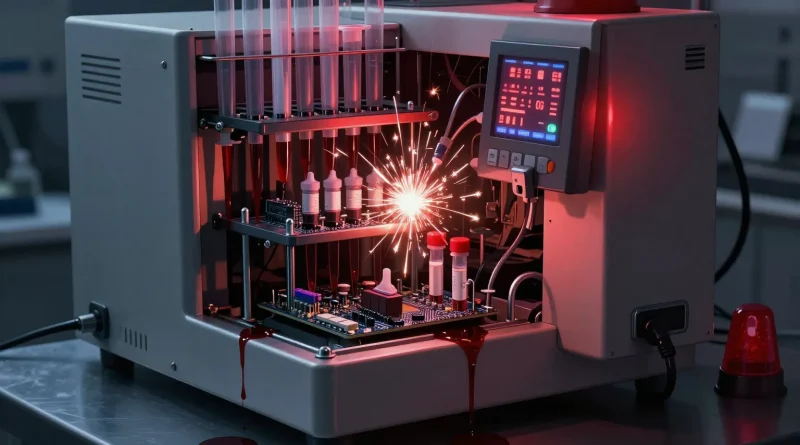
Theranos Exposed: How Hype and Fake Tech Destroyed a Billion Dollar Startup
Introduction
In Silicon Valley, bold promises often attract massive attention. Few stories, however, captured global imagination like Theranos. Founded by Elizabeth Holmes, the company claimed it would revolutionize healthcare with a simple idea. A few drops of blood could replace traditional lab testing. Investors, politicians, and media outlets believed the story. As a result, Theranos reached a valuation of nine billion dollars. Yet behind the sleek black turtlenecks and confident speeches, the technology did not work. What followed became a cautionary tale about hype, deception, and unchecked ambition.
The Vision That Captivated Silicon Valley
Theranos positioned itself as a healthcare disruptor. Elizabeth Holmes promised faster, cheaper, and less painful blood testing. She compared Theranos to companies like Apple and Intel, presenting herself as the next Steve Jobs. Because healthcare innovation is complex, many outsiders trusted her claims. Investors such as Rupert Murdoch and firms like Walgreens invested heavily. Consequently, Theranos gained credibility without public proof.
The Technology That Never Worked
Theranos claimed its Edison machines could perform hundreds of tests from a single finger prick. In reality, the machines produced unreliable results. Employees later revealed that Theranos secretly used traditional lab equipment from companies like Siemens to run most tests. Meanwhile, the Edison devices failed internal validation. Instead of fixing the technology, leadership hid the truth.
How Hype Replaced Scientific Validation
Unlike traditional medical startups, Theranos avoided peer review. The company refused to publish data or allow independent testing. At the same time, it relied heavily on marketing and secrecy. Board members lacked medical or laboratory expertise. As a result, hype replaced verification. This environment allowed false claims to spread unchecked.
Read More: MySpace vs Facebook: How the First Social Media Giant Lost Its Users
Key Players and Strategic Missteps
Elizabeth Holmes maintained tight control over information. Former COO Ramesh Balwani enforced secrecy and intimidation. Whistleblowers faced threats rather than investigation. Walgreens partnered with Theranos without demanding rigorous validation. Eventually, journalists from The Wall Street Journal exposed the inconsistencies. Once scrutiny increased, the illusion collapsed quickly.
Timeline of Theranos’ Rise and Fall
| Year | Event | Impact |
|---|---|---|
| 2003 | Theranos founded | Vision attracts early interest |
| 2014 | Valuation reaches 9 billion dollars | Media and investor hype peaks |
| 2015 | Journalistic investigation begins | Technology claims questioned |
| 2016 | Regulatory shutdowns | Operations restricted |
| 2018 | Company dissolves | Legal consequences follow |

Read More: AI Customer Support Revolution: How Chatbots Are Transforming Businesses in Nigeria
Why Regulators Stepped In
The Centers for Medicare and Medicaid Services investigated Theranos labs. Inspectors found serious safety violations. As a result, Theranos lost its certification to operate labs. This action confirmed what critics suspected. The technology was not just flawed; it was dangerous. Patients received inaccurate results that could affect medical decisions.
Lessons for the Tech Industry
Theranos shows the danger of blind belief in founders. Innovation must be supported by evidence. Transparency matters, especially in healthcare. Investors must demand validation, not just vision. Furthermore, strong governance and independent oversight can prevent similar disasters.
Comparing Real Innovation vs Theranos Claims
| Aspect | Theranos | Legitimate Health Tech Companies |
|---|---|---|
| Technology validation | Secretive | Peer reviewed |
| Testing accuracy | Unreliable | Clinically proven |
| Regulatory approach | Avoided scrutiny | Embraced compliance |
Read More: Blockbuster’s Collapse: The Streaming Warning It Ignored
Frequently Asked Questions
What was the Theranos scandal?
The Theranos scandal involved false claims about blood testing technology that never worked as promised.
Did Theranos technology ever work?
No. Investigations showed the core technology failed to deliver accurate results.
Who exposed Theranos?
Investigative journalism, particularly by The Wall Street Journal, played a key role in exposing the truth.
What happened to Elizabeth Holmes?
She faced criminal charges related to fraud and deception after the company collapsed.
Conclusion
Theranos did not fail because innovation is impossible. It failed because truth was sacrificed for hype. The company promised a healthcare revolution but delivered deception instead. Today, the Theranos scandal stands as a powerful reminder. In technology, especially healthcare, transparency and validation must always come before ambition.


Pingback: Nortel’s Crash: How a Telecom Giant Vanished From the Industry - Latest AI/Tech Info
Pingback: Why Tech Giants Collapse: Common Mistakes That Kill Successful Companies - Latest AI/Tech Info