
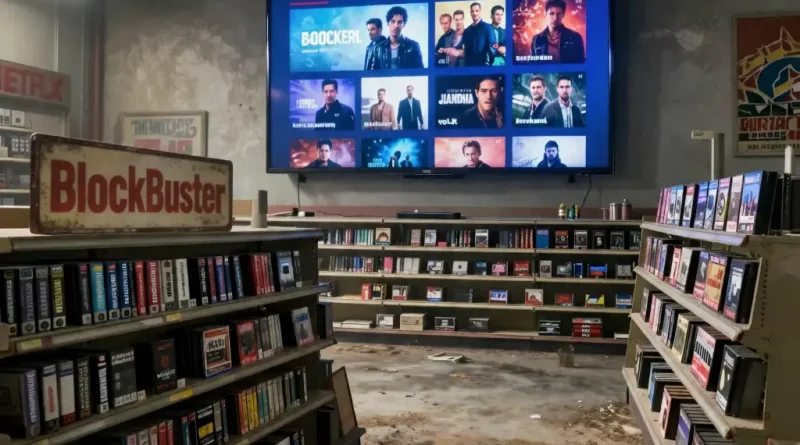
Blockbuster’s Collapse: The Streaming Warning It Ignored
Introduction
On weekend evenings in the early 2000s, Blockbuster stores were packed with customers searching for the latest movies. The blue and yellow logo symbolized entertainment itself. Families planned movie nights around store visits, while late fees quietly powered profits. At the same time, a small company called Netflix was experimenting with a different idea. Instead of physical shelves, it focused on convenience, subscriptions, and later streaming. Blockbuster saw Netflix but failed to understand the shift in consumer behavior. That moment marked the beginning of the end.
How Blockbuster Built a Home Entertainment Empire
Blockbuster dominated the video rental market through scale and visibility. At its peak, the company operated more than 9,000 stores worldwide. Exclusive studio deals allowed it to stock popular movies before competitors. Customers depended on physical rentals, and Blockbuster relied heavily on late fees as a major revenue source. As a result, leadership believed stores would remain relevant for decades. Unfortunately, this belief discouraged innovation.
Netflix’s Early Disruption Strategy
Netflix entered the market in 1997 with a mail-based DVD rental model. Customers ordered movies online and received them at home. Unlike Blockbuster, Netflix eliminated late fees and introduced monthly subscriptions. This approach immediately appealed to frustrated customers. In 2000, Netflix offered itself to Blockbuster for roughly 50 million dollars. Blockbuster executives dismissed the offer, viewing Netflix as insignificant. That decision would later define both companies’ futures.
The Streaming Shift Blockbuster Ignored
As internet speeds improved, Netflix transitioned toward digital streaming. Instead of reacting early, Blockbuster attempted to protect store revenue. Although the company launched Blockbuster On Demand, internal resistance slowed progress. Meanwhile, Netflix invested aggressively in streaming infrastructure, recommendation algorithms, and licensing deals. By the time Blockbuster responded, customer habits had already changed.
Read More: Yahoo’s Decline: How Google Quietly Took Over the Internet
Business Model Comparison
The contrast between the two companies reveals why one survived and the other failed.
| Company | Core Model | Revenue Strategy | Customer Experience |
|---|---|---|---|
| Blockbuster | Physical rentals | Late fees and per rental payments | Store visits required |
| Netflix | Streaming subscription | Monthly recurring subscriptions | On-demand digital access |
Leadership Decisions That Accelerated the Collapse
Blockbuster made several critical mistakes. Leadership focused on short-term profits instead of long-term trends. Late fees remained a priority despite customer complaints. Innovation moved slowly due to internal bureaucracy. In contrast, Netflix continuously adapted. It used data to understand viewing behavior and invested heavily in original content. This strategic gap widened quickly.
The Fall of Blockbuster
By 2010, Blockbuster filed for bankruptcy. Thousands of stores closed worldwide, and the brand faded from relevance. Today, only one Blockbuster store remains as a cultural relic. Netflix, however, evolved into a global entertainment giant with original films, series, and billions in annual revenue.
Read More: AI Customer Support Revolution: How Chatbots Are Transforming Businesses in Nigeria
Key Decisions That Changed Everything
| Decision | Long-Term Impact |
|---|---|
| Rejecting the Netflix acquisition | Lost early streaming leadership |
| Delayed streaming investment | Fell behind digital competitors |
| Dependence on late fees | Damaged customer trust |
Lessons for Modern Tech Companies
Blockbuster’s collapse offers powerful lessons. Market dominance does not guarantee survival. Companies must listen to changing customer behavior. Most importantly, innovation should guide strategy rather than fear of disruption. Businesses that resist change often lose relevance faster than expected.
Read More: MySpace vs Facebook: How the First Social Media Giant Lost Its Users
Frequently Asked Questions
Did Blockbuster really turn down buying Netflix?
Yes. In 2000, Blockbuster rejected an opportunity to acquire Netflix for about 50 million dollars.
Why did Netflix succeed while Blockbuster failed?
Netflix embraced technology early, focused on convenience, and invested heavily in streaming and data-driven decisions.
Could Blockbuster have survived the streaming era?
Possibly. Early adoption of streaming and eliminating late fees could have changed its trajectory.
Is Blockbuster still operating today?
Only one store remains, mainly as a tourist attraction rather than a functioning brand.
Conclusion
Blockbuster’s collapse remains one of the most important case studies in tech history. The company ignored a clear warning and underestimated a disruptive competitor. Netflix proved that adapting early and prioritizing user experience can reshape entire industries. For modern businesses, the message is clear. Innovate early or risk becoming irrelevant.



Pingback: Theranos Exposed: How Hype and Fake Tech Destroyed a Billion Dollar Startup - Latest AI/Tech Info
Pingback: Nortel’s Crash: How a Telecom Giant Vanished From the Industry - Latest AI/Tech Info