

AI-Powered Creativity: How Generative AI Is Changing Music, Art, and Film
In a small studio in Lagos, a young musician watches in awe as an AI generates a melody that perfectly complements her lyrics. Across town, a digital artist tweaks a piece of art created by an AI model, turning it into a gallery-ready masterpiece. Meanwhile, in a studio in Johannesburg, filmmakers experiment with AI to storyboard scenes in minutes instead of weeks. Artificial intelligence is no longer just a tool for scientists or tech companies. It is becoming a creative partner, transforming music, art, and film in ways that were unimaginable just a few years ago. Generative AI is redefining how creators work, collaborate, and imagine new worlds. It is sparking a revolution that blends human intuition with machine intelligence.
How Generative AI Works in Creative Industries
Generative AI uses machine learning models to create content based on patterns in data. In creative industries, this means AI can compose music, generate visual art, or even write scripts and design movie scenes. The core idea is collaboration. AI amplifies human creativity by handling repetitive tasks, suggesting ideas, or producing drafts that artists can refine. This allows creators to focus on expression, storytelling, and emotional impact rather than technical constraints.
Music Transformation Through AI
Music production is experiencing a surge in AI innovation. AI can suggest chord progressions, harmonies, or beats, allowing musicians to experiment faster and explore styles outside their expertise. AI generates realistic vocal tracks, letting artists test melodies without hiring singers. Streaming services use AI to create playlists and even custom tracks based on listener preferences. Tools like Amper and Aiva accelerate composition. Synthesizer V and Replica Studios create realistic vocals, while AI-powered music recommendations enhance listening experiences.
| Feature | AI Application | Impact |
|---|---|---|
| Melody generation | Amper, Aiva | Faster composition and experimentation |
| Vocal synthesis | Synthesizer V, Replica Studios | Realistic vocals without studio recording |
| Music recommendation | Spotify AI, Endel | Personalized listening experiences |
Read More: The Green Revolution in Computing: Can AI Be Sustainable?
AI and Visual Art Innovation
Artists now collaborate with AI to explore new forms and styles. Tools like DALL-E and MidJourney create high-quality images from text prompts. AI can transform a photo or painting into a completely different style while preserving the subject. AI accelerates the creation of illustrations, concept art, and marketing materials. Artists are no longer limited by manual techniques.
Film and Storytelling Reimagined
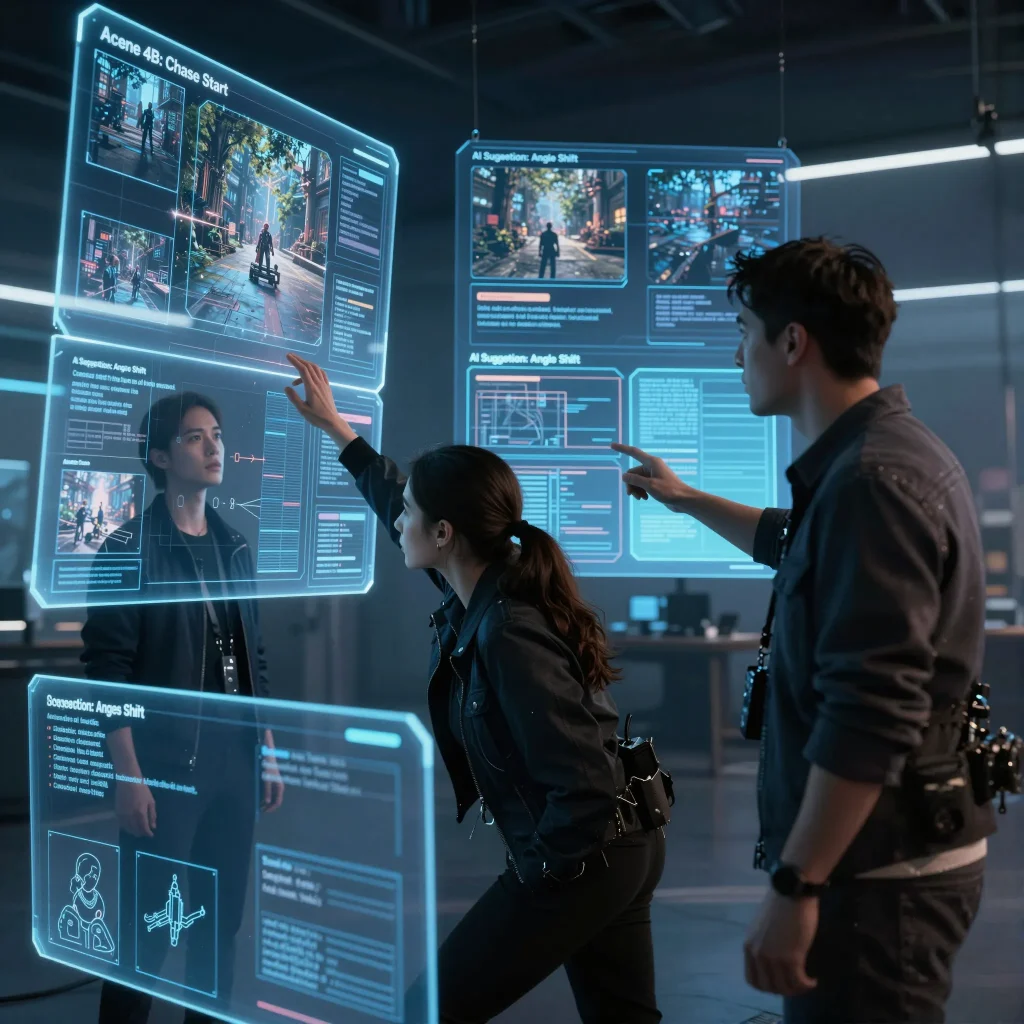
Generative AI is entering filmmaking in surprising ways. AI assists with scriptwriting, suggests dialogue, and structures story arcs. AI generates storyboard frames and concept visuals quickly. Editing tools powered by AI streamline color grading, scene matching, and post-production workflows. Filmmakers can experiment with ideas faster, reduce production time, and explore concepts that were previously too costly or time-consuming. Tools like ChatGPT, Sudowrite, Runway, Storyboard AI, Adobe Sensei, and DaVinci AI are transforming creative workflows.
Read More: The future of flight: Can AI make flying sustainable?
Challenges of AI-Powered Creativity
While AI opens new possibilities, it also brings challenges. Copyright and ownership questions arise over AI-generated content. Ethical concerns like deepfakes and misuse in media can cause harm. Some traditional roles may be reduced or altered, and over-reliance on AI can impact originality and personal style. Creators must balance AI assistance with human judgment to maintain authenticity and integrity.
Read More: AI in Lip Reading Breaking Barriers for the Deaf and Beyond
The Future of Generative AI in Creative Industries
Generative AI is reshaping creativity by enabling new forms of collaboration. Musicians, artists, and filmmakers are already exploring AI as a partner rather than a replacement. The future promises immersive AI-generated experiences, interactive storytelling, and cross-disciplinary innovation. This is a moment for creators to experiment boldly and redefine art in the age of intelligence.
Frequently Asked Questions
Can AI replace human artists?
No, AI enhances human creativity but cannot replicate intuition, emotion, or cultural understanding fully.
Do I need technical skills to use AI for art or music?
Most modern AI tools are user-friendly and require little to no coding experience.
Is AI-generated content legally protected?
Copyright laws are evolving and may vary depending on jurisdiction.
Which AI tools are popular for creative industries?
DALL-E, MidJourney, Aiva, Runway, ChatGPT, Adobe Sensei, Synthesizer V.
How will AI affect traditional art and music jobs?
Some tasks may become automated, but new roles in AI-assisted creativity are emerging.
Conclusion
Generative AI is transforming music, art, and film. It empowers creators to innovate faster, explore new possibilities, and collaborate with intelligent systems. The technology challenges traditional norms but also opens doors to entirely new forms of expression. As AI continues to evolve, the most exciting creations will emerge from the partnership between human imagination and machine intelligence. The creative revolution has begun, and those who embrace AI today are shaping the art of tomorrow.

Pingback: Regulating AI: What New Global Policies Mean for Nigerian Developers - Latest AI/Tech Info
Pingback: This AI Is Transforming Productivity Like Never Before - Latest AI/Tech Info