
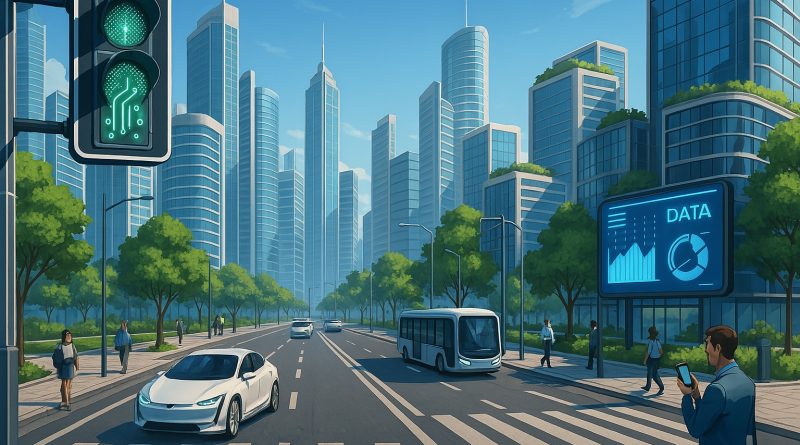
Smart Cities 2025: The Role of AI in Urban Planning
From Gridlock to Greenlights: A Morning in 2025
Samantha’s alarm buzzed at 6:30 AM—not a second early, not a second late. Her digital assistant, attuned to her sleeping patterns and daily schedule, had adjusted her wake-up time after scanning for the optimal commuting window. As she got ready, the smart mirror suggested a light jacket; the AI forecast system predicted a cool breeze around her usual coffee stop.
By the time she stepped out, the city was already in motion—not just the people, but the city itself. Smart traffic lights recalibrated in real time to prioritize emergency vehicles. Buses rerouted autonomously to avoid congestion caused by a sudden water main break—reported, assessed, and responded to by an AI-driven infrastructure management system.
This isn’t science fiction. This is a day in the life of a smart city in 2025—where AI doesn’t just assist us; it helps cities think, adapt, and serve better.
The Rise of Smart Cities: A Quick Overview
Urbanization is accelerating. By 2050, nearly 70% of the world’s population is expected to live in cities. This growth brings massive challenges: traffic congestion, housing shortages, pollution, and strained public services.
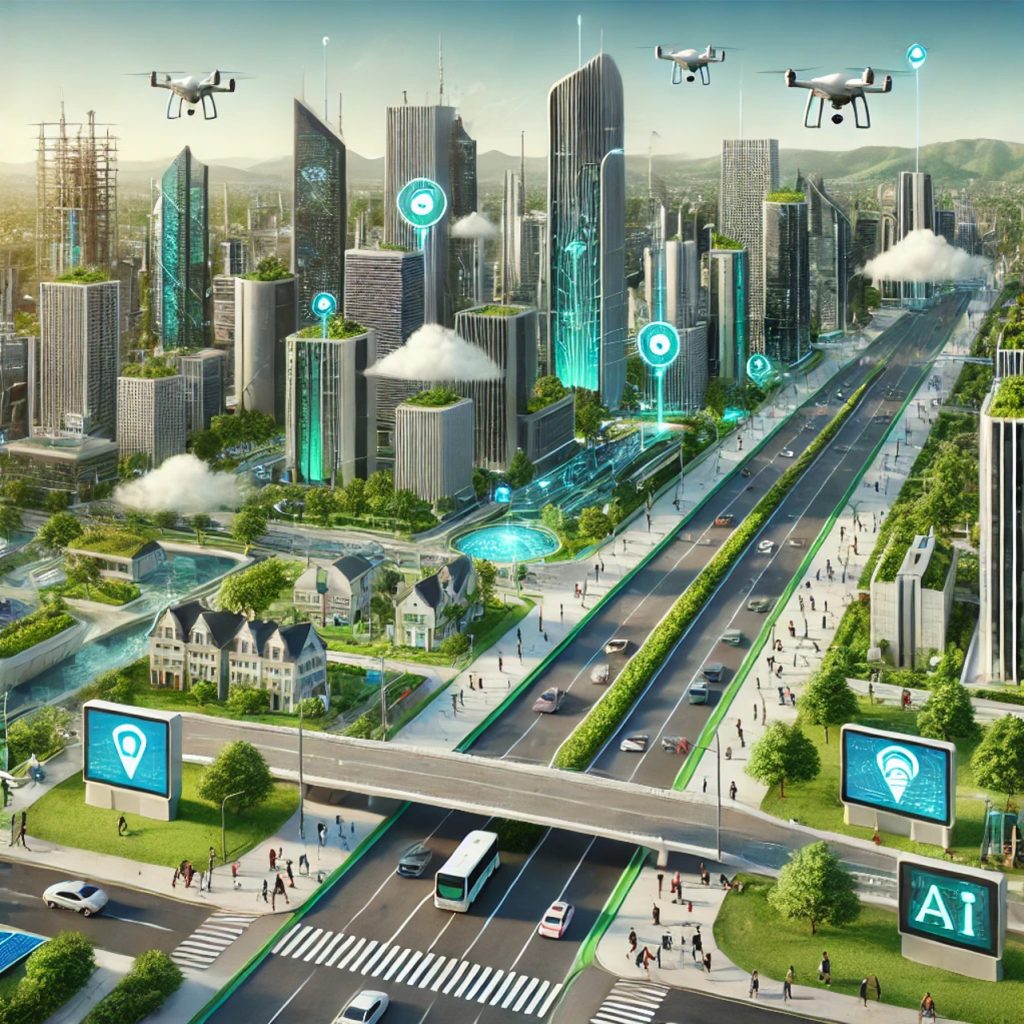
Enter smart cities—urban areas that use digital technology and data to improve lives, enhance services, and reduce environmental impact. While sensors, IoT devices, and 5G networks are the backbone, Artificial Intelligence (AI) is the brain.
AI enables real-time decision-making, predictive analytics, and automation that makes smart cities not only connected—but truly intelligent.
Read More: AI-Powered Search Wars – Google’s Gemini vs. OpenAI’s rumored AI-powered search engine.
How AI is Revolutionizing Urban Planning
1. Predictive Urban Development
AI helps city planners simulate urban growth, forecast housing needs, and identify areas for commercial development. With machine learning models trained on historical data, economic trends, and satellite imagery, planners can design cities that grow organically and sustainably.
For instance, AI can predict which neighborhoods will face overcrowding in the next five years—allowing preemptive infrastructure upgrades and policy adjustments.
2. Traffic Management and Mobility Solutions
Traffic is more than an inconvenience—it costs billions in lost productivity and emissions. AI-based traffic systems analyze real-time vehicle flows, weather conditions, and event data to optimize signals, reroute traffic, and even suggest staggered work hours to employers.
Autonomous vehicles and ride-sharing fleets will soon integrate into smart transit ecosystems powered by AI—ensuring seamless, efficient, and safe transportation.
3. Environmental Monitoring and Climate Resilience
AI is pivotal in fighting urban pollution and climate change. Smart sensors track air quality, water levels, and waste levels, while AI systems predict environmental risks—like flooding or heat waves—and trigger alerts or mitigation protocols.
In Singapore, for example, AI-driven systems are used to detect illegal waste dumping and manage flood-prone areas by analyzing rainfall and drainage capacity in real time.
4. Smart Infrastructure Maintenance
Traditional infrastructure inspections are labor-intensive and slow. AI enables predictive maintenance through data collected from sensors embedded in roads, bridges, and buildings.
Using computer vision and machine learning, drones can scan for cracks or structural weaknesses, and AI models determine the urgency of repairs—saving cities both time and money.
5. Citizen-Centric Urban Design
AI doesn’t just serve governments—it empowers citizens. By analyzing feedback from social media, surveys, and digital platforms, AI can detect community sentiments and help shape public spaces that reflect what people truly want.
For example, AI can help identify where more parks are needed based on population density, mental health data, and geolocation heatmaps of pedestrian activity.
Read More: Top AI Tools to Master in 2025 for Free
Challenges and Ethical Considerations
With great power comes great responsibility. The integration of AI into urban planning raises critical concerns:
- Privacy and Surveillance: Constant data collection may feel intrusive. Cities must implement transparent policies to protect citizen data.
- Bias in AI Models: If AI is trained on biased data, it may perpetuate inequality. Diverse datasets and ethical AI design are essential.
- Digital Divide: Not all communities have equal access to smart infrastructure. Bridging the gap is vital to avoid creating a two-tier city system.
Smart cities must be inclusive, transparent, and ethical—putting people, not just technology, at the heart of urban planning.
Global Examples: AI in Action
Barcelona, Spain
Using AI and IoT, Barcelona has optimized its waste management by deploying smart bins that signal when they need collection—reducing unnecessary fuel use and pollution.
Toronto, Canada
Sidewalk Labs (a subsidiary of Alphabet) launched an ambitious smart city initiative with AI-integrated design principles. While the project faced privacy concerns, it sparked a global conversation on the balance between innovation and citizen rights.
Dubai, UAE
Dubai’s “Smart Dubai” initiative uses AI to power everything from traffic control to energy optimization. The city aims to become paperless and 100% AI-driven in governance.
Read More: Exploring AI Education: Top Nigerian Universities Offering AI Courses
The Future Ahead: A New Kind of City Planner
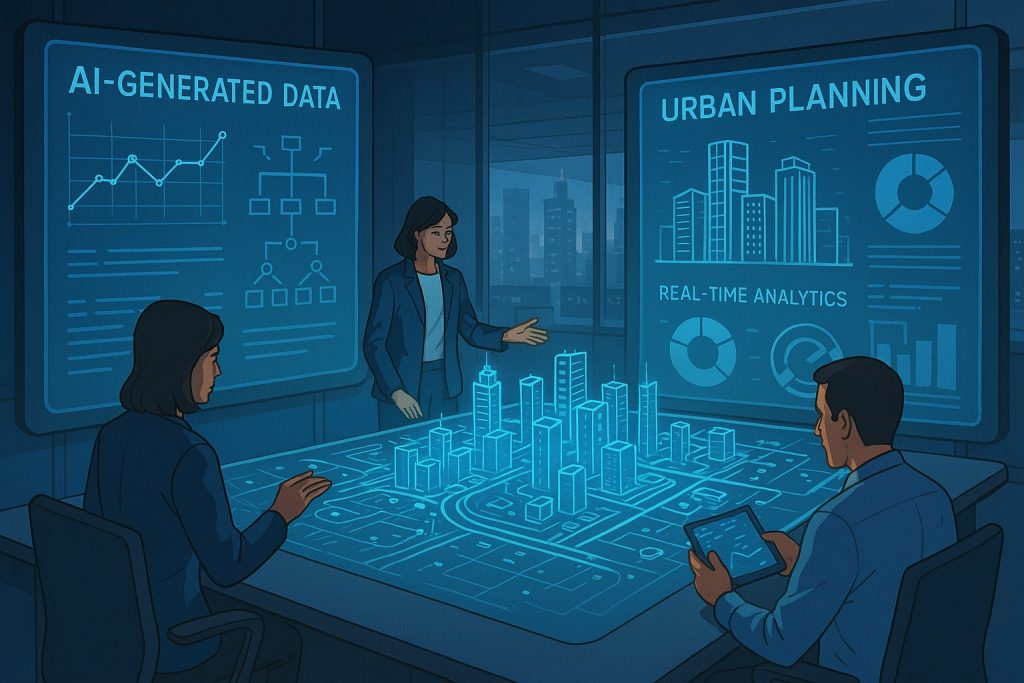
In 2025 and beyond, urban planners won’t be working alone—they’ll collaborate with AI systems capable of processing terabytes of urban data, offering recommendations, and simulating scenarios that no human mind could fully grasp.
The urban planner of tomorrow is part engineer, part designer, part data scientist—and part futurist.
Conclusion: Building Smarter, Together
AI in urban planning isn’t just about technology—it’s about creating cities where people can live better, breathe easier, and move freely. It’s about using intelligence—both artificial and human—to craft neighborhoods that nurture, not stifle.
The smart city of 2025 doesn’t just anticipate your commute—it helps reduce it. It doesn’t just collect your data—it protects it. And it doesn’t just respond to problems—it prevents them.
In this brave new world, the question isn’t whether AI will shape our cities—but how wisely we choose to wield its potential.
Key Takeaways
- AI is transforming urban planning through predictive analytics, smart infrastructure, and citizen-centric design.
- Ethical concerns—like privacy, bias, and accessibility—must be addressed.
- Real-world cities like Barcelona and Dubai are leading the charge in AI integration.
- The future of city planning is collaborative—between humans and intelligent systems.
Are we building the future we want to live in? With AI as our partner, the answer can be yes.



Pingback: Why Tabnine Might Be Your New Favorite Coding Partner in 2025 - Newline Tech