

Astronomy Meets AI: Personalized Cosmic Insights
The cosmos, a vast and awe-inspiring expanse, has captivated humanity for millennia. From ancient civilizations gazing at the stars to modern-day astronomers peering through powerful telescopes, we have relentlessly sought to understand our place within this grand celestial tapestry. Now, a new era is dawning, one where artificial intelligence (AI) is poised to revolutionize our understanding of the universe and offer personalized cosmic insights like never before.1. The Limitations of Traditional Astronomy
For centuries, astronomical research has relied heavily on manual observation, data analysis, and human interpretation. While these methods have yielded groundbreaking discoveries, they also possess inherent limitations.
- Data Overload: The sheer volume of data generated by modern telescopes and space missions is overwhelming for human researchers to analyze effectively.
- Subjectivity in Analysis: Human interpretation of astronomical phenomena can be subjective, leading to potential biases and inconsistencies.
- Limited Predictive Power: Traditional methods often struggle to predict rare or unexpected celestial events.
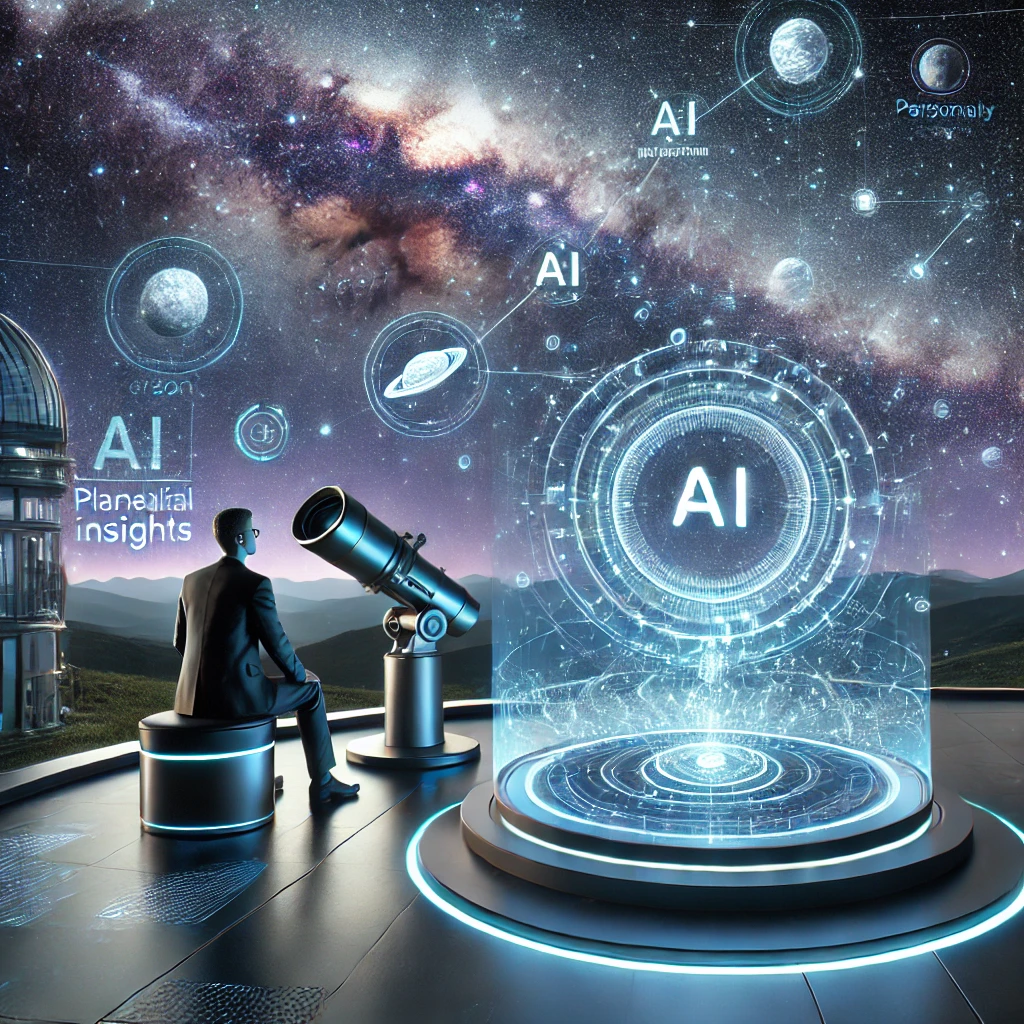
2. AI to the Rescue
AI, with its ability to process vast amounts of data, identify patterns, and make predictions, offers a powerful solution to these challenges. Here’s how AI is transforming the field of astronomy:
- Data Analysis and Classification: AI algorithms can rapidly analyze massive datasets from telescopes, identifying patterns and anomalies that might be missed by human researchers. This includes tasks like:
- Exoplanet Detection: AI can analyze stellar light curves to identify subtle dips caused by planets passing in front of their stars.
- Galaxy Classification: AI can accurately categorize galaxies based on their shapes, sizes, and other characteristics.
- Supernova Detection: AI can swiftly identify the telltale signs of supernova explosions, enabling rapid follow-up observations.
- Image Recognition and Processing: AI-powered image recognition algorithms can enhance the quality of astronomical images, removing noise and artifacts. They can also identify and classify objects within images, such as stars, galaxies, and nebulae.
- Predictive Modeling: AI can develop sophisticated models that predict the behavior of celestial objects, such as the orbits of asteroids and comets.
This information can be crucial for:
- Predicting Near-Earth Objects: Identifying potentially hazardous asteroids that could pose a threat to Earth.
- Planning Space Missions: Optimizing trajectories for spacecraft and ensuring safe navigation.
3. Personalized Cosmic Experiences
Beyond scientific research, AI is poised to revolutionize the way individuals experience the cosmos. Here are some exciting possibilities:
- Personalized Stargazing: AI-powered apps can analyze your location, time, and weather conditions to recommend the best places and times for stargazing. They can also provide real-time information on celestial events visible in your area.
- Interactive Planetariums: AI can create immersive and personalized planetarium experiences, allowing visitors to explore the universe from any perspective and interact with celestial objects in real-time.
- Personalized Cosmic Stories: AI can generate personalized narratives about the cosmos, weaving together scientific facts with mythological stories and personal preferences. Imagine an AI-powered storyteller that crafts a unique cosmic tale just for you, based on your interests and personality.
4. Ethical Considerations
As with any powerful technology, the use of AI in astronomy raises important ethical considerations:
- Data Privacy: Ensuring the privacy of astronomical data and the responsible use of AI algorithms is crucial.
- Bias and Fairness: It’s essential to address potential biases in AI algorithms, such as biases related to data collection and training.
- Accessibility: Ensuring that the benefits of AI-powered astronomy are accessible to everyone, regardless of their background or socioeconomic status, is paramount.
5. The Future of Astronomy
The integration of AI into astronomy is still in its early stages, but its potential is immense. As AI technologies continue to advance, we can expect to see even more groundbreaking discoveries and personalized cosmic experiences.
- AI-powered Telescopes: The next generation of telescopes will be equipped with powerful AI capabilities, allowing them to autonomously observe and analyze the universe.
- Citizen Science: AI can empower citizen scientists to contribute to astronomical research by analyzing data and identifying new discoveries.
- Space Exploration: AI will play a crucial role in planning and executing future space missions, from exploring distant planets to establishing human colonies beyond Earth.
Conclusion
The convergence of astronomy and AI marks a new era of cosmic exploration. By harnessing the power of AI, we can unlock the mysteries of the universe, gain deeper insights into our place within it, and share these wonders with the world in unprecedented ways.
Want to stay updated on the latest advancements in AI, space exploration, and other cutting-edge technologies? Subscribe to our tech newsletter today and receive exclusive insights, news, and analysis delivered straight to your inbox.



Your point of view caught my eye and was very interesting. Thanks. I have a question for you.