

Yahoo’s Decline: How Google Quietly Took Over the Internet
In the early days of the internet, Yahoo was everywhere. It was the homepage for millions, a directory, a search engine, an email provider, and a news aggregator all in one. For a brief moment, Yahoo seemed untouchable. But while the company rested on its early success, a quiet rival named Google was building something far more powerful. Within a decade, Yahoo went from an internet giant to an afterthought. This is the story of how Google overtook Yahoo and reshaped the internet.
Yahoo’s decline was not sudden. It was the result of a series of strategic missteps, leadership changes, and failure to innovate while competitors pushed forward. Google’s rise, meanwhile, focused on simplicity, speed, and search intelligence. The contrast between the two companies highlights the importance of vision, execution, and adaptability in the tech world.
How Yahoo Dominated the Early Internet
Founded in 1994 by Jerry Yang and David Filo, Yahoo started as a directory of websites. It quickly grew into a full internet portal offering email, news, games, and search. At its peak, Yahoo was valued at over $100 billion and commanded massive traffic.
Yahoo thrived because it became a one-stop shop. Users did not need to visit multiple websites to get content. This model worked well before search algorithms became sophisticated.
Google’s Quiet Invasion
While Yahoo focused on expanding its portal and media offerings, Google introduced a revolutionary search algorithm called PageRank. Google prioritized relevant search results over flashy content or advertising. Users noticed the difference immediately.
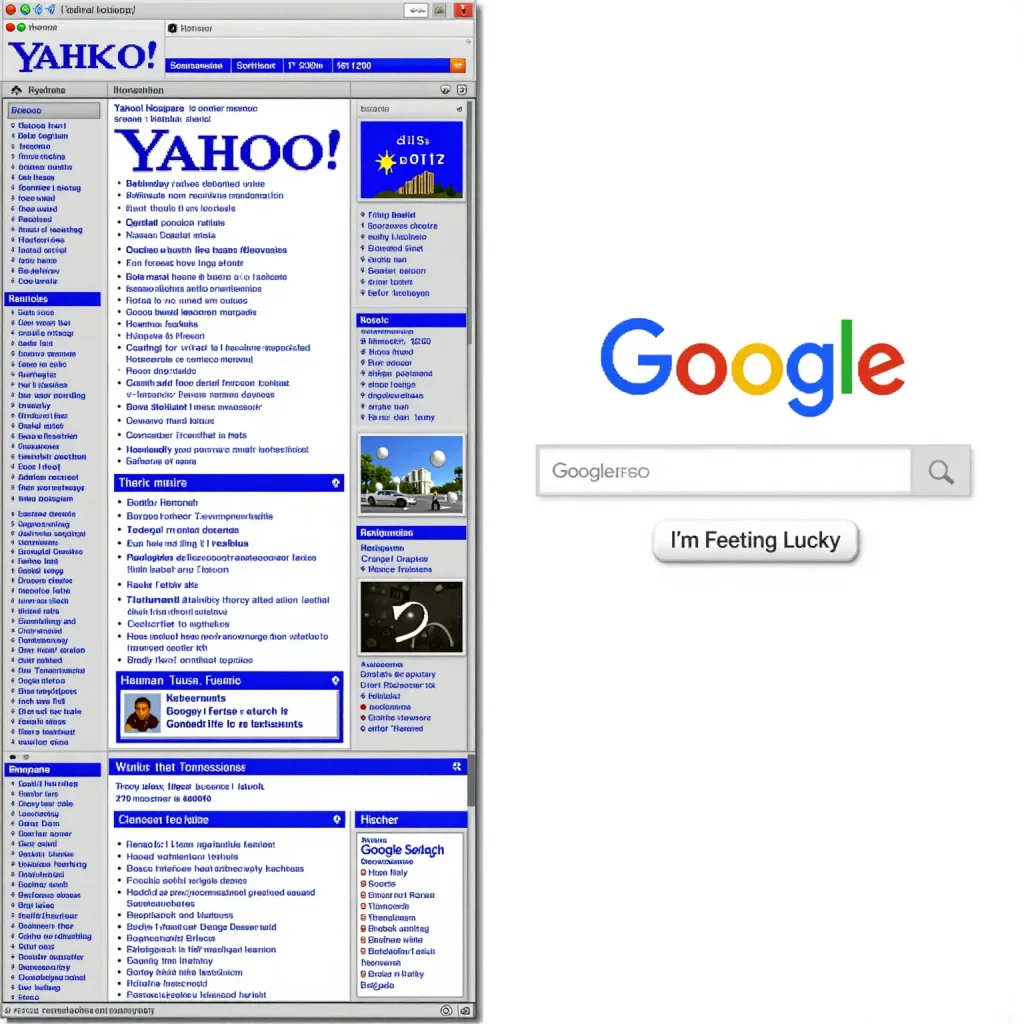
Google’s simple interface and superior search results won trust and usage. While Yahoo added new features and cluttered its homepage with ads and promotions, Google remained fast, clean, and reliable.
Read More: Nokia’s Collapse: Inside the Decisions That Cost It the Smartphone War
Key Missteps That Led to Yahoo’s Decline
Several factors contributed to Yahoo’s loss of dominance:
- Failure to focus: Yahoo tried to do everything — portal, media, search, and email — without excelling in one area.
- Leadership instability: Frequent CEO changes disrupted long-term vision.
- Poor acquisitions: Yahoo bought companies like GeoCities and Tumblr but failed to integrate them effectively.
- Ignoring mobile and search innovation: As users shifted to Google Search and later mobile devices, Yahoo lagged behind.
By contrast, Google concentrated on search and advertising technology, allowing it to grow while Yahoo floundered.
Timeline of Yahoo vs Google
| Search for market leadership begins | Event | Impact |
|---|---|---|
| 1994 | Yahoo founded | Rapid growth as web directory |
| 1998 | Google founded | Focused on superior search algorithm |
| 2000 | Yahoo IPO | Portal dominance peak |
| 2004 | Google IPO | Search market leadership begins |
| 2006 | Yahoo acquires Flickr | Integration challenges |
| 2007 | Google expands Gmail and search | User adoption grows, Yahoo declines |
| 2012 | Yahoo loses search contract to Microsoft | Further market erosion |
Read More: Kodak’s Downfall Explained How a Photography Legend Was Killed by Digital Tech
How Google’s Strategy Outpaced Yahoo
Google’s success came from relentless focus on user experience, data-driven decision-making, and investment in AI search capabilities. Meanwhile, Yahoo continued to chase media partnerships, often prioritizing revenue over innovation. By the time Yahoo attempted to refocus, Google had already established a monopoly in search, email, and advertising.
Lessons From Yahoo’s Decline
Yahoo’s story teaches several lessons for tech companies today:
- Focus matters: Diversification without strategic execution can dilute strength.
- Innovation beats complacency: Resting on past success can be fatal.
- Leadership stability is crucial: Consistent vision allows long-term planning.
- User experience is king: Simple, reliable solutions win trust and loyalty.
Frequently Asked Questions
Why did Yahoo lose to Google
Yahoo lost focus on search, made poor acquisitions, and failed to innovate in search and mobile technologies.
Could Yahoo have survived
Yes, if it had prioritized search and adapted quickly to emerging technologies, it might have retained relevance.
What is Yahoo’s current business?
Today, Yahoo operates as a media and email company under Verizon Media, focusing on content and advertising.
Did Google copy Yahoo’s mode?
No. Google focused on search technology and user experience rather than being a portal.
Who leads internet search today?
Google dominates, followed by Bing and a few smaller search engines.
Conclusion
Yahoo’s decline is a reminder that early success does not guarantee long-term survival. In technology, companies must continuously innovate, focus on their strengths, and anticipate user needs. Google’s rise shows that simplicity, speed, and vision often trump legacy and size. Yahoo’s story remains a cautionary tale for every tech company navigating rapid change.


Pingback: MySpace vs Facebook: How the First Social Media Giant Lost Its Users - Latest AI/Tech Info
Pingback: Blockbuster’s Collapse: The Streaming Warning It Ignored - Latest AI/Tech Info