
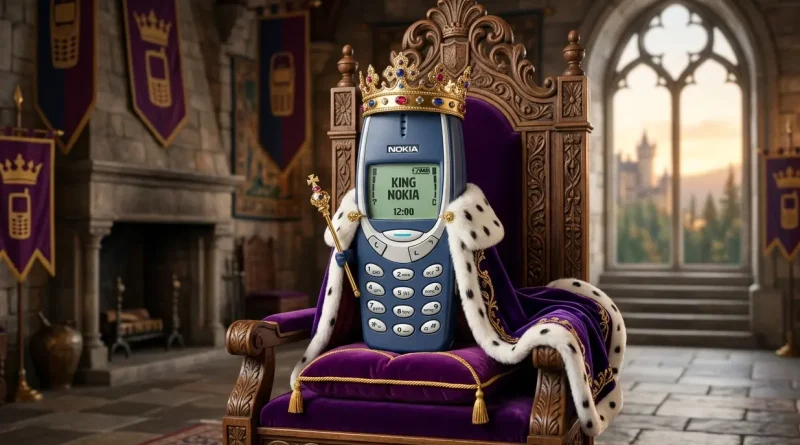
Why Nokia Dominated Mobile Phones Before the Smartphone Era
Introduction
Before touchscreens, app stores, and social media apps defined mobile life, one brand ruled the world of mobile phones. If you owned a phone in the late 1990s or early 2000s, chances are it was a Nokia.
From the iconic ringtone to nearly indestructible hardware, Nokia became a global symbol of mobile communication. Its devices were simple, reliable, and built to last.
At its peak, Nokia controlled a massive share of the global mobile market. But while its dominance seemed unshakable, the arrival of smartphones changed everything.
To understand its later decline, we must first explore why Nokia became so successful in the first place.
The Rise of Nokia
Nokia began as a diversified company before focusing on telecommunications. By the late 1990s, it had become the world’s leading mobile phone manufacturer.
Its rapid growth was driven by strong engineering, global expansion, and a deep understanding of consumer needs at the time.
Key Factors Behind Nokia’s Dominance
Nokia’s success was not accidental. It was built on several strategic advantages that set it apart from competitors.
1. Durable and Reliable Hardware
Nokia phones were known for their durability. Many users joked that they were “unbreakable.”
This reliability made Nokia devices ideal for:
- Everyday users
- Travelers
- Emerging markets
- Business professionals
Consumers trusted the brand because the devices consistently performed well.
2. User-Friendly Design
Nokia focused on simplicity. Its interface was easy to navigate, even for first-time mobile users.
Features included:
- Clear menus
- Physical keypads
- Simple navigation buttons
- Long battery life
This ease of use helped Nokia attract a wide global audience.
3. Strong Global Distribution
Nokia expanded aggressively into international markets.
It became especially dominant in:
- Europe
- Asia
- Africa
By offering affordable devices, Nokia captured emerging markets where mobile adoption was rapidly growing.
4. Wide Product Range
Nokia produced phones for different segments of the market.
Read More: Why AOL Failed to Survive the Modern Internet Era
| Segment | Example Offering |
|---|---|
| Entry-level | Basic calling and SMS phones |
| Mid-range | Phones with games and customization |
| Premium | Business-focused devices |
This allowed Nokia to serve millions of users across different income levels.
5. Battery Life Advantage
Unlike modern smartphones, early Nokia devices could last for days on a single charge.
This was a major advantage in regions with limited access to electricity.
Table: Why Nokia Dominated the Market
| Strength | Impact |
|---|---|
| Durable hardware | Built strong brand trust |
| Simple interface | Easy adoption globally |
| Affordable pricing | Captured emerging markets |
| Wide distribution | Massive global reach |
| Long battery life | Practical for daily use |
These factors combined to make Nokia the global leader in mobile phones for years.
The Competitive Landscape Before Smartphones
Before smartphones, mobile phones focused mainly on communication.
Competitors included companies like Motorola and Sony Ericsson.
However, Nokia maintained an edge through better usability, affordability, and product variety.
The Role of Symbian OS
Nokia also invested in software through the Symbian operating system.
At the time, Symbian powered many advanced mobile devices, offering features such as:
- Basic apps
- Internet browsing
- Multimedia support
Although it was powerful for its era, Symbian later struggled to compete with modern smartphone platforms.
Early Warning Signs
Despite its dominance, Nokia began facing challenges as technology evolved.
Some early warning signs included:
- Slow adaptation to touchscreen interfaces
- Complex software compared to newer systems
- Increasing competition from tech-driven companies
These issues became more serious with the arrival of smartphones.
Read More: The Decline of Skype: How Zoom and Microsoft Teams Took Over Video Communication
Lessons from Nokia’s Success
Nokia’s rise offers valuable insights for modern tech companies.
| Lesson | Explanation |
|---|---|
| Understand user needs | Simplicity drove adoption |
| Focus on reliability | Built long-term trust |
| Expand globally | Captured emerging markets |
| Diversify products | Reached multiple customer segments |
These strategies helped Nokia dominate for over a decade.
Read More: What Happened to Vine: How Instagram and TikTok Replaced a Short-Video Pioneer
Frequently Asked Questions
Why was Nokia so popular?
Nokia was popular because of its durable phones, long battery life, and user-friendly design.
Did Nokia invent smartphones?
Nokia developed early smart devices, but it did not lead the modern smartphone revolution.
What made Nokia different from competitors?
Its combination of affordability, reliability, and global reach gave it a major advantage.
Does Nokia still exist today?
Yes. Nokia now focuses on telecommunications infrastructure and network technology.
Conclusion
Nokia’s dominance before the smartphone era was built on strong fundamentals — reliability, simplicity, and global accessibility. The company understood what users needed at the time and delivered it consistently.
However, the technology landscape changed rapidly with the rise of smartphones. While Nokia once led the industry, new innovations reshaped consumer expectations.
Its story remains one of the most important examples in tech history — showing how even the most dominant companies must continue to evolve to stay ahead.


Pingback: How Netflix Leveraged Data and Technology to Become a Global Streaming Giant - Latest AI/Tech Info
Pingback: How Amazon Uses Advanced Logistics Technology to Power One of the World’s Fastest Delivery Networks - Latest AI/Tech Info